
 English
  русский
 عربى
عربى
Industry News
Home / Blogs / Industry News / Understanding Roll-Fed Aseptic Packaging Material: A Practical Buyer's Guide
Content
When a beverage brand moves a product from chilled distribution to shelf-stable packaging, the laminate that wraps the liquid often decides whether the switch pays off. Roll-fed aseptic packaging material is the most widely used material format for high-speed aseptic filling lines: it arrives as a continuous web, is sterilized inside the filler, and is formed into a carton around the product during filling. For a new launch or a line conversion, the roll-fed format delivers the best overall balance of output speed, material economy, and package integrity, provided the laminate is specified and verified correctly. This guide covers what roll-fed aseptic packaging material is, how its layers function, where it fits in the filling process, and what a buyer should check before selecting a supplier.
Roll-fed aseptic packaging material is a multi-layer laminate wound onto reels for use in aseptic filling machines. Inside the filler, the web passes through a sterilizing bath, usually hydrogen peroxide, is rinsed or heated to remove residues, and then is formed into a vertical tube around the filling column. The tube is sealed longitudinally, filled with product, and sealed transversely to create individual packages that are cut and folded into their final carton shape.
Because the entire material supply sits on one continuous reel, a filling line can run for long shifts without stopping to load new packaging units. This uninterrupted operation is the main reason juice, dairy, and plant-based beverage producers prefer the roll-fed format over blank-fed sleeves when volumes are high.
Roll-fed material fits best when a production plan concentrates on one carton format at high volumes, for example 200 ml to 1 litre brick or gable-top packages. It also suits products that need consistent barrier performance over months of ambient shelf life, because the laminate is engineered as one continuous structure rather than assembled from separate sheets.
As a packaging supplier that produces both aseptic carton material and the caps that close those cartons, we treat the laminate and the closure as one system. The paperboard gives stiffness, the foil blocks oxygen and light, and the polyethylene layers create hermetic seals. On top of the carton, the bottle cap that suits aseptic carton packaging must match the same barrier and hygiene logic, which is why closure specification belongs in the same conversation as material selection.
For brands ready to source the material directly, our roll-fed aseptic packaging material offering covers standard and custom laminate structures for juice, dairy, tea, and liquid food applications.
 Roll-Fed Aseptic Packaging Material Manufacturer, Custom Filling MatchLile (Taizhou) Technology Co., Ltd is a China roll-fed aseptic packaging material manufacturer and factory, matching OEM/ODM material to ...View Product →
Every roll-fed aseptic laminate balances cost, machine performance, and barrier requirements. The typical structure uses paperboard in the middle, polyethylene on both faces, and an aluminium foil layer buried between them. The table below summarizes the usual build, from the outside printed surface to the inner food-contact layer.
| Layer position | Material | Primary function |
|---|---|---|
| Outer coating | Low-density polyethylene | Moisture barrier and printing surface |
| Paperboard | Food-grade board, 200 to 350 g/m² | Stiffness, shape retention, impact resistance |
| Adhesive tie layer | Polyethylene or copolymer | Bonds paperboard to the foil |
| Barrier layer | Aluminium foil, 6 to 12 microns | Blocks oxygen, light, and aroma migration |
| Adhesive tie layer | Polyethylene | Bonds foil to the inner sealant |
| Inner sealant | LDPE or metallocene LLDPE | Heat sealing, liquid resistance, food contact |
The performance of the finished package depends on each of these layers. If the foil is too thin, oxygen transmission rises and shelf life shortens. If the inner sealant is not matched to the filling temperature and product chemistry, seals can fail inside the machine. A serious supplier should provide a layer-by-layer declaration rather than a generic "aseptic grade" label.
The roll-fed format changes the economics of a filling line, not just the machine preference. Compared with blank-fed machines that handle pre-cut sleeves, a roll-fed system offers three measurable advantages:
The choice between feeding formats usually comes down to production volume and format flexibility. The following comparison frames the decision.
| Criterion | Roll-fed | Blank-fed |
|---|---|---|
| Feed format | Continuous web on a reel | Pre-cut flattened sleeves |
| Production speed | High | Moderate |
| Format flexibility | Limited by web width | High, quick changeover |
| Barrier control | Uniform across the web | Depends on sleeve seam consistency |
| Cost per package | Lower at high volume | Higher due to cutting scrap |
| Best fit | Long runs, one main format | Multiple SKUs, lower volumes |
If a portfolio contains many carton sizes and frequent changeovers, blank-fed may justify a higher unit cost. For a core SKU running around the clock, roll-fed is the more economical route, which is why high-volume beverage producers standardize on it.
Understanding the path the web takes inside the aseptic filler helps explain why the material is specified the way it is. The diagram below shows the five main stages of the roll-fed process.
This sequence explains why the inner sealant matters as much as the barrier layers. During tube forming and final sealing, the polyethylene must melt, flow, and bond within a fraction of a second while the web is moving at line speed. A laminate that works perfectly on one filler brand may fail on another if the sealant melt index or foil thickness is not adjusted.
The outer print surface also affects machine reliability. The web passes through chemical baths and heated rollers at high speed; the surface coating must resist chemicals, heat, and abrasion without delaminating or blocking on the reel.
Not all roll-fed aseptic packaging material performs the same in production, and a bad batch creates expensive problems: jammed fillers, leaking packages, and quality failures that can escalate quickly. Before finalizing a supplier, verify the following points.
Ask for oxygen transmission rate and moisture vapour transmission rate figures measured on the finished laminate, not only on the foil. An oxygen transmission rate below 1 cm³/m² per day at 23°C and 50% relative humidity is a common target for shelf-stable juices. Confirm the test conditions, because they change the result dramatically.
Heat-seal strength should be verified at the minimum, target, and maximum sealing temperatures your filler can maintain. The laminate must also tolerate a defined level of product splash on the seal area. A sealant that repels the product well produces fewer rejects during high-speed filling.
Web width tolerance, layer thickness uniformity, and splicing quality determine uptime. A splice is a joint in the web, and each splice is a potential weak point. Ask the supplier to state the maximum splice count per 1,000 metres and confirm that splices are detectable by the filler's sensors.
The laminate must comply with food-contact regulations in every market where the finished product will be sold. For products exported to the EU or the US, migration testing results and declarations of compliance are mandatory, not optional. The closure systems that support shelf-life extension need the same level of documentation, because the cap and the laminate share the same product-contact surface.
If your team does not yet have a packaging specification sheet, start by reviewing the aseptic carton packaging formats that are available in different dimensions and map each one to the filler model you operate.
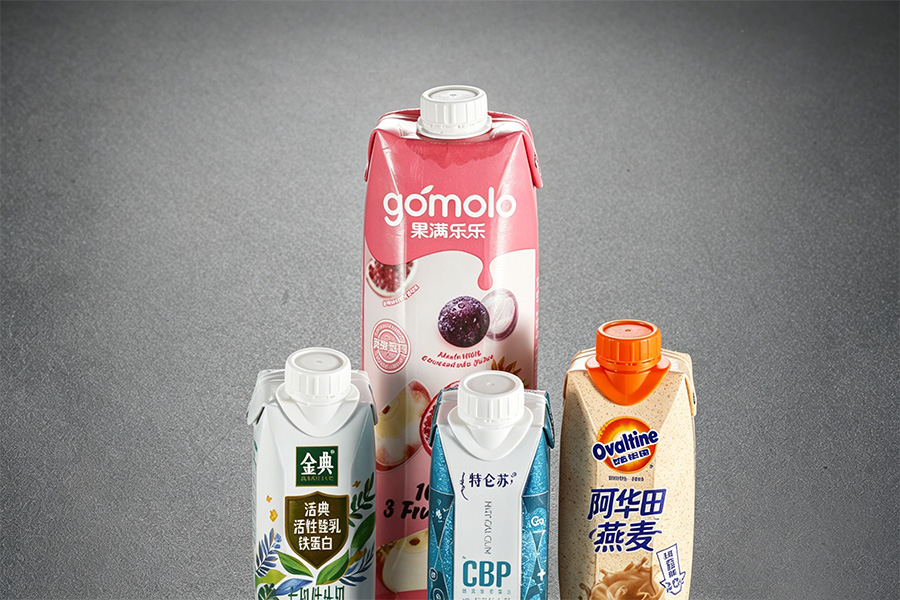 Aseptic Carton Formats | Brik, Slim, Prisma, Rex and Gemina PackagingLile (Taizhou) Technology Co., Ltd, a China aseptic carton cap direct manufacturer, offers matching caps and capacities for common asepti...View Product →
Most of the attention in material selection goes to the laminate itself, but the screw cap or flip-top closure is where consumers interact with the package throughout its life. The closure must match the carton's opening geometry, seal against the inner laminate surface, and survive the same hydrogen peroxide exposure during sterilization without degrading.
Closure and laminate failures often surface in the same place: the pour opening. A carton that seals perfectly along its side seams can still leak around the cap if the cap liner is incompatible with the inner sealant layer. This is why closure selection belongs in the material specification process rather than a separate purchasing decision. The same logic applies to viscous products, where pour behavior and resealing demand a specific spout design; our sauce and liquid food carton caps are engineered for those conditions.
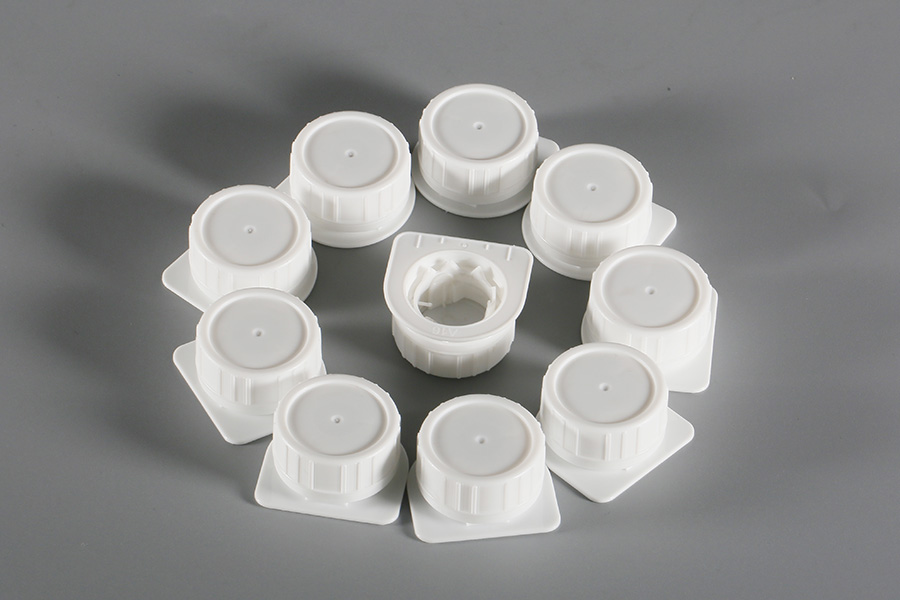 Sauce & Liquid Food Carton Caps Manufacturer, Bulk Supply | Taizhou LileLile (Taizhou) Technology Co., Ltd is a China sauce & liquid food carton caps manufacturer, bulk Supply source building acid and oil-resi...View Product →
How long can roll-fed aseptic packaging keep a product fresh?
With a properly specified foil barrier and consistent seal integrity, ambient shelf life typically reaches 6 to 12 months for juices and dairy drinks, and longer for products formulated for extended stability. The exact figure depends on the product's oxygen and light sensitivity, so the supplier should calculate expected shelf life from the laminate's measured barrier data.
Can one roll-fed material serve multiple carton sizes?
Within a fixed web width, yes. The filler adjusts package length by changing the cutting interval and forming tools. Changing web width requires a different reel and usually a machine changeover, which is why production planners group SKUs by web width.
Does roll-fed material work on every aseptic filler?
No. Each filler manufacturer specifies its own web width range, sterilization chemistry, and sealing temperature window. The material must be trialled on the actual machine before volume production. A supplier that can adjust the sealant formulation to your filler is more valuable than one offering only a standard structure.
Is roll-fed aseptic packaging more sustainable than other formats?
In production, yes, the continuous web generates less edge trim and therefore less process waste than pre-cut blanks. At end of life, the paperboard share of the laminate is renewable and can be recycled where suitable collection and recycling infrastructure exists; the foil and polyethylene layers require separation or dedicated recycling. Understanding the aseptic carton concept is a good first step for evaluating the sustainability profile of each format.
If you have any questions, please fill out the contact form at the bottom of the page and contact us.
© Lile (Taizhou) Technology Co., Ltd.
Toudao Town, Taizhou City, Zhejiang Province, China.
liletz@163.com
+8613706571648