
 English
  русский
 عربى
عربى
Industry News
Content
- 1 Why Dairy Carton Caps Are Different from Ordinary Bottle Caps
- 2 Key Technical Requirements for Dairy Carton Caps
- 3 Screw Cap vs. Flip-Top: Which Closure Structure Fits Your Dairy Product?
- 4 How Dairy Carton Caps Perform on Automated Filling Lines
- 5 Questions to Ask Before Choosing a Dairy Carton Cap Supplier
- 6 Sustainability Trends Reshaping Dairy Carton Cap Design
- 7 Conclusion: Build a Reliable Dairy Packaging Closure Strategy
When you buy a bottle of water or a carbonated soft drink, the cap is a commodity—functional, standardized, and interchangeable. Dairy carton caps are different. The closure on a milk or yogurt carton sits at the intersection of food safety, consumer convenience, and high-speed production. If it leaks in transit, the entire shipment is compromised. If it is too hard to open, your brand takes the blame. If it fails on a filling line, you lose production time and money.
This guide is written for packaging engineers, procurement managers, and brand owners who already know they need carton packaging and are now evaluating cap options. We will cover the technical requirements that matter, the structural differences between cap types, how closures behave on automated lines, and the questions you should ask before committing to a supplier.
Why Dairy Carton Caps Are Different from Ordinary Bottle Caps
The most common packaging for fresh milk, UHT milk, and yogurt drinks is a multilayer carton—paperboard, aluminum foil, and polyethylene (PE) fused together. This structure is excellent for protecting the product from light and oxygen, but it creates a challenge at the opening point. The carton neck must be sealed with a closure that can withstand the same conditions as the carton itself: temperature fluctuations, vibration during transport, and the internal pressure of certain dairy products.
Dairy formulations add another layer of complexity. Milk fat can leave residues on the cap threads and inner surfaces, making reclosure less reliable over time. Products with higher fat content also require a tighter seal to prevent oxidation, which directly affects shelf life. Ordinary water bottle caps are designed for a simple, single-use cycle with minimal residue. Dairy caps must perform under repeated opening and closing over weeks or months.
The moment of purchase is also different. Milk and yogurt are frequently consumed in stages—a family buys a carton, opens it, uses some, and stores the rest. The ability to reseal the carton securely after every use is not a luxury; it is essential. This is why reclosure performance is a primary design criterion, not an afterthought.
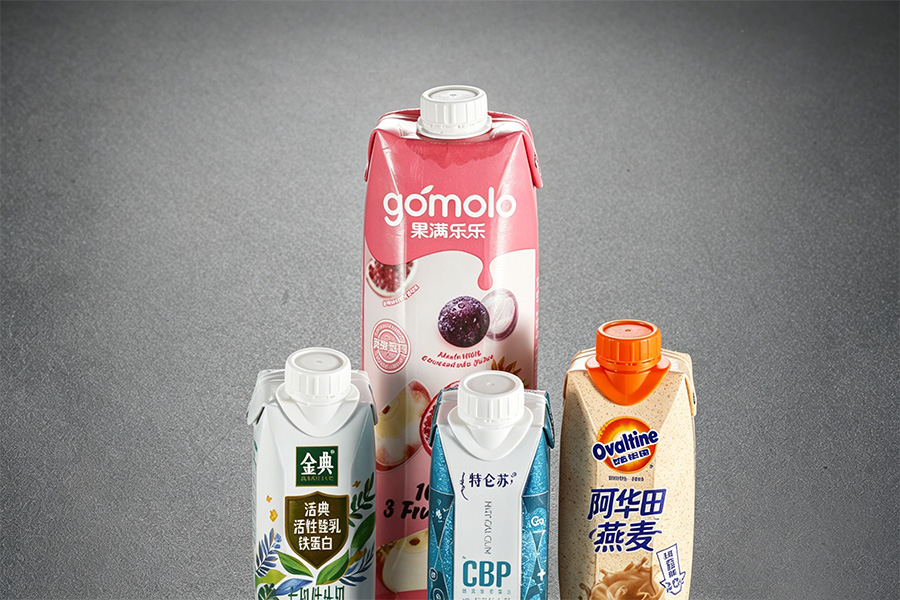
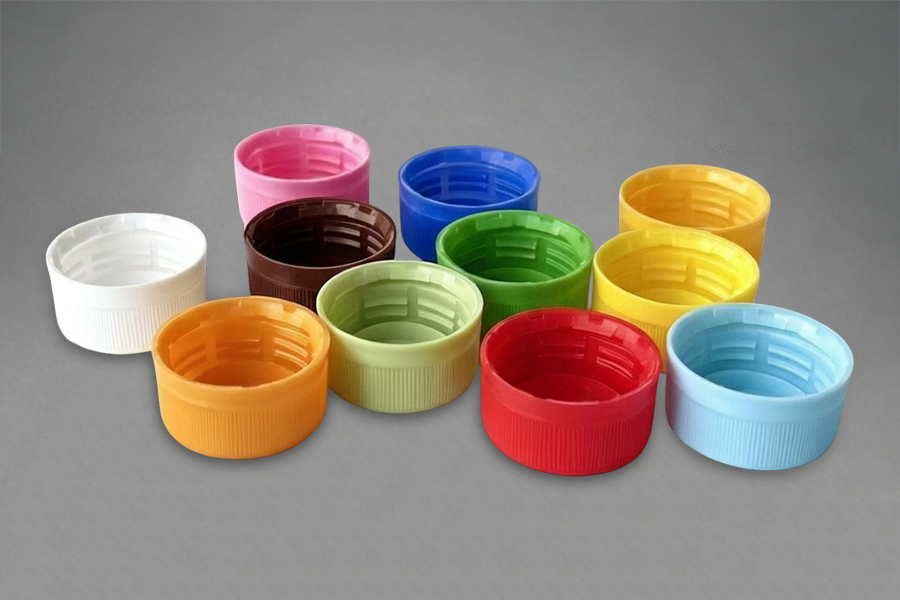
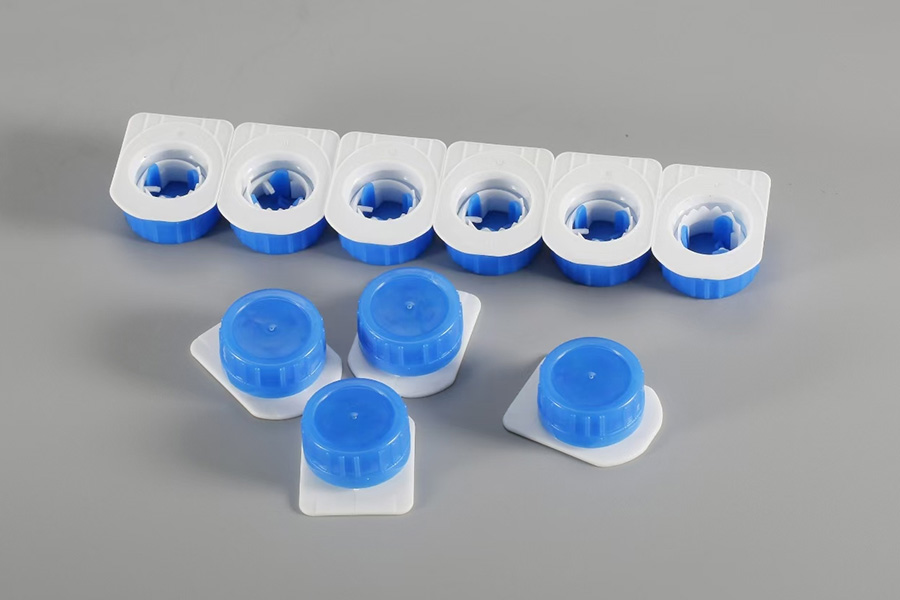
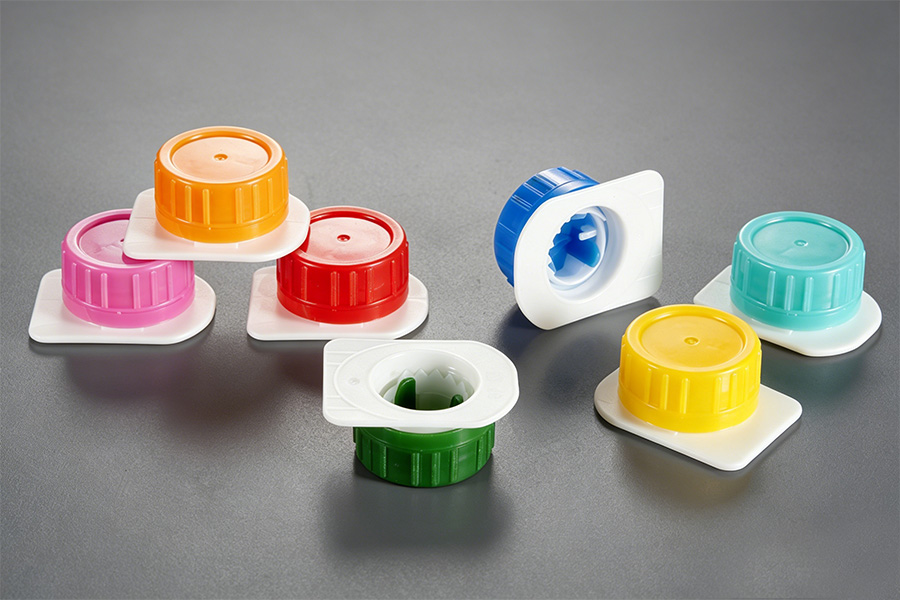
Before we examine the technical details, it helps to see what a finished product looks like. Our dairy carton cap product line covers the common configurations used across fresh dairy and ambient dairy applications.
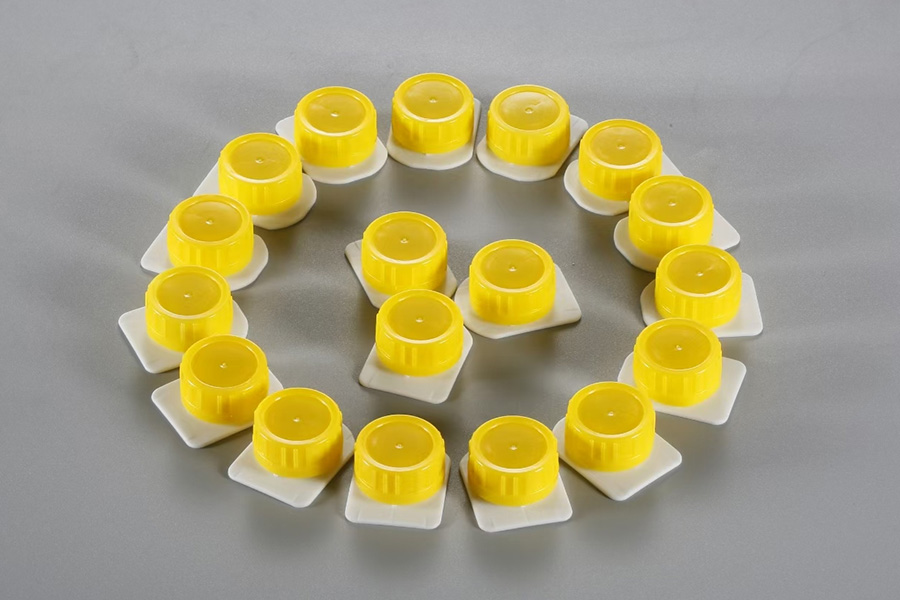 Dairy Carton Caps Manufacturer, Bulk & OEM Custom Orders | Taizhou LileLile (Taizhou) Technology Co., Ltd is a China Dairy carton caps manufacturer, Bulk & OEM Custom Orders supplier for milk, yogurt and UHT ...View Product →
Key Technical Requirements for Dairy Carton Caps
If you are evaluating a dairy carton cap, three technical pillars determine whether it will work for your product: seal integrity, opening torque, and material compliance. Each one affects your cost, your consumer, and your regulatory risk differently.
Leakage Prevention and Seal Integrity
Leakage is the highest-cost failure mode in dairy packaging. A single leaking carton can damage an entire case, trigger a recall, and create a hygiene issue in the distribution channel. The seal must hold across the entire supply chain—from the filling line through warehousing, refrigeration, and retail display.
Two factors dominate leakage risk. First is the precision of the thread engagement between the cap and the carton neck finish. If the pitch or depth of the thread is off by even a small fraction, the cap may appear closed but not create a uniform compression force around the sealing area. Second is the behavior under temperature variation. Dairy products move through cold chains and ambient storage, and the cap material must maintain its sealing force across a wide temperature range without deforming.
Before you approve any cap, run a simple test: fill cartons with the actual product, cap them under production conditions, and put them through a vibration table and a temperature cycling chamber. A cap that passes a static water-leak test at room temperature can still fail after 48 hours of vibration at 4 °C followed by a shift to 25 °C. For more detail on how these closures hold up over repeated use, see our discussion on maintaining reliable reclosure in dairy carton screw caps.
Opening Torque and User Experience
Opening torque is the force required to turn the cap from a fully closed position to the first thread release. It is measured in inch-pounds (in-lb) or Newton-centimeters (N·cm). If the torque is too high, children and elderly consumers will struggle, and you will see complaints. If it is too low, the cap can loosen during transport or be perceived as "cheap."
There is no universal standard, but a common target range for dairy carton caps is between 15 and 25 in-lb for initial opening. After the first opening, the reclosure torque naturally drops, and the design should still maintain a secure seal at the lower value. The challenge is that higher-fat dairy products can leave a film on the threads, which acts as a lubricant and changes the torque behavior on the second and third openings.
Some suppliers offer low-torque designs with modified thread profiles or surface textures. These are particularly relevant for products aimed at children or older consumers. But low torque must not come at the expense of sealing force—the cap still needs vertical compression on the sealing ring, independent of the turning effort. When you request samples, ask the supplier to document both initial and repeat opening torque values, not just the first opening figure.
Food-Contact Material Compliance
The cap sits in direct contact with the dairy product, so the material must be food-grade and compliant with the regulations of your target market. Polypropylene (PP) is the dominant material for dairy carton caps. It offers a good balance of stiffness, chemical resistance to milk fats, and compatibility with carton neck finishes. High-density polyethylene (HDPE) is occasionally used, but PP is more common because it holds thread dimensions better at elevated temperatures.
Two regulatory frameworks matter most for U.S. and European markets: FDA 21 CFR 177.1520 for food-contact polypropylene in the United States, and EU Regulation 10/2011 for plastic materials and articles intended to come into contact with food in Europe. A reputable supplier should be able to provide a Declaration of Compliance (DoC) for each material batch, along with supporting migration test data.
Do not accept a verbal assurance on compliance. Ask to see the documentation and check that it references the specific material grade, not a generic statement. If your product will be sold in multiple regions, confirm early that the cap material meets all relevant standards—retrofitting a different material later is expensive and time-consuming.
Screw Cap vs. Flip-Top: Which Closure Structure Fits Your Dairy Product?
Dairy carton caps come in two fundamental structures: screw caps and flip-top caps. Both serve the same basic purpose, but they differ in how consumers interact with them and how they behave on your filling line.
Screw caps are the workhorse of the aseptic dairy industry. They offer a full 360-degree seal, which makes them the most reliable option for preventing leaks during transport and storage. The helical thread provides a mechanical advantage, allowing consumers to exert a high clamping force with relatively little effort. For products with a longer shelf life or those that require repeated reclosure, screw caps are usually the safer choice.
Flip-top caps are designed for one-hand operation. The consumer pops open a hinged spout, pours, and snaps it shut. This is a meaningful advantage for on-the-go consumption—think drinkable yogurt in a single-serve carton. However, flip-top designs have more moving parts and a smaller sealing surface compared to screw caps. The hinge and the spout seal must work together under repeated flexing, which demands careful material selection and hinge design.
Beyond the basic structure, the spout orifice and flow characteristics play a big role, especially for high-viscosity products. Whole milk pours easily, but drinkable yogurt or a thick fermented milk drink does not. A flip-top or screw cap with a narrow orifice will produce slow, messy pouring. For these products, you need a cap with a wider spout and possibly a venting feature that allows air to enter as the product exits, preventing the "glugging" effect.
The decision is ultimately driven by your product format and consumer use case:
- Screw cap: Best for large family-size cartons, products with long shelf life, and markets where resealing is a critical habit.
- Flip-top: Best for single-serve portions, products consumed immediately, and consumers who value easy one-hand opening.
- High-viscosity products: If your product is drinkable yogurt or a lactic acid beverage, look for caps for high-viscosity liquid food products that feature wider spouts and controlled-flow geometry.
If you are still weighing options for a new product launch, review our in-depth comparison of cap solutions for aseptic juice and dairy products. The same principles apply whether you are working with a fruit-based drink or a dairy-based one.
How Dairy Carton Caps Perform on Automated Filling Lines
The most common—and most expensive—mistake in cap selection is focusing only on the consumer-facing experience and ignoring how the cap performs on the filling line. A cap that pours beautifully can still be a production nightmare if it jams in the capping machine or fails to engage consistently with the carton neck.
The first compatibility point is thread precision. The cap's internal thread must match the carton neck finish within tight tolerances. If the thread dimensions vary from cap to cap or from batch to batch, the capping machine will either under-torque or over-torque. Under-torqued caps leak; over-torqued caps can strip the threads, which is a defect no consumer will tolerate. The supplier's molding precision is your first defense. Ask for dimensional inspection reports from each production batch.
The second compatibility point is cap feeding. Modern filling lines use vibratory bowl feeders or linear sorters to orient caps before they reach the capping head. For this to work, every cap must have a consistent center of gravity and a predictable outer profile. A cap with an asymmetric lug or an uneven wall thickness will feed intermittently, causing line stoppages that cost you thousands of dollars per hour.
Third is capping speed. High-speed lines run at 20,000 to 40,000 cartons per hour. At these speeds, the capping head has only a fraction of a second to pick up the cap, position it over the neck, and spin it to the correct torque. The cap must be rigid enough to withstand this mechanical handling without deforming, and its surface finish must provide consistent friction against the capping chucks.
When a supplier sends you samples, do not just inspect the caps—run them on your line. Ideally, run a full production shift and measure defect rates, torque consistency, and jamming frequency. If you are planning a new line or a new cap, the historical performance data is useful, but nothing replaces a live trial. For a deeper look at the interaction between closures and filling equipment, read about how screw caps support automated dairy filling processes.
Questions to Ask Before Choosing a Dairy Carton Cap Supplier
Cap buyers do not have the luxury of endless testing cycles. A structured evaluation framework will help you separate a competent supplier from a costly experiment. The following questions are designed to be asked directly of any candidate supplier:
- Can you provide a complete Declaration of Compliance for food-contact materials? Request it for the specific material grade, not a generic statement. Check it covers your target market's regulations.
- Do you have an independently audited quality management system? Look for certifications that cover your industry's standards. Ask about the defect rate on similar dairy cap projects.
- Can you supply samples for sealing tests and line trials? A supplier that hesitates on sample support is raising a red flag. You need enough caps for a full production trial, not a handful.
- What is your mold precision and how do you guarantee batch-to-batch consistency? Ask about their in-house mold shop, measurement tools, and acceptable tolerance range. Vague answers signal a lack of control.
- Do you have emergency order responsiveness? Dairy lines cannot afford downtime. Ask about lead times for both standard and rush orders, and whether they hold buffer inventory of common cap types.
- Are you tracking regulatory trends such as tethered caps and lightweighting? If a supplier has no opinion or no plan regarding upcoming plastic packaging regulations, they will likely leave you to deal with the consequences alone.
If your product requires non-standard features—a custom color matched to your brand, an integrated QR code, or a special flow-control structure—you will need a supplier with real engineering depth. In that case, look into whether they offer custom plastic cap manufacturing options. Custom closure manufacturing for non-standard requirements is a distinct capability that separates true manufacturers from mere traders.
 Custom Plastic Bottle Caps Manufacturer, OEM Closures with Color and Logo OptionLile (Taizhou) Technology Co., Ltd is a China custom plastic bottle caps manufacturer, offering OEM/ODM PP/PE closures with color matchin...View Product →
Sustainability Trends Reshaping Dairy Carton Cap Design
Sustainability in dairy packaging is no longer an optional differentiation factor. For a cap supplier, it is increasingly a technical requirement driven by regulation and retail pressure, especially if you sell in Europe. Three trends are reshaping the design of dairy carton caps.
Lightweighting is the first and most immediate trend. The goal is to reduce the total weight of plastic in each cap without compromising the sealing force or the thread precision. The impact is significant at scale: a cap that is 0.5 g lighter, multiplied across hundreds of millions of units, reduces total plastic resin usage by hundreds of tons per year. Lightweighting requires precise mold engineering because material is removed from the cap's internal ribs and skirt while retaining the critical sealing surfaces.
Tethered caps are the second trend. Under the EU Single-Use Plastics Directive, beverage containers up to 3 liters sold in Europe must have caps that remain attached to the bottle or carton after opening. The compliance deadline is approaching, and dairy products are in scope. A tethered cap requires a different mold design—the retention strap must survive repeated opening torques and constant flexing during use without breaking. This is a harder engineering problem than it appears, and not every supplier has the mold capability to solve it correctly.
Mono-material designs are the third trend. To improve the recyclability of the entire carton package, some manufacturers are moving toward closures that use a single polymer type, avoiding multi-material blends that complicate recycling streams. Polypropylene caps are already effectively mono-material in most cases, but the trend also extends to the colorants and additives used. For example, carbon black pigment is problematic for near-infrared sorting in recycling facilities, so many producers now opt for gray or other detectable colors.
None of these trends should override the core requirements of sealing and usability. A lightweight cap that leaks is not sustainable—it creates product waste that dwarfs the plastic savings. A tethered cap that breaks after two openings fails the consumer. The best suppliers will show you how they balance sustainability with function, not just how they reduce grams of plastic.
Conclusion: Build a Reliable Dairy Packaging Closure Strategy
Choosing the right dairy carton cap is a multi-step decision that touches food safety, consumer satisfaction, and production efficiency. The correct order of priorities is: understand your product's physical requirements, evaluate the cap's technical specifications, test it under real conditions, and only then commit to a supplier.
First, define your non-negotiables. Milk type, viscosity, target shelf life, and consumption pattern determine whether you need a screw cap or flip-top, and what torque and seal standards you must meet. Second, translate those needs into technical parameters and request the corresponding data—bore dimensions, torque values, material compliance documents—from every candidate supplier. Third, run a full production trial with actual product, not just water, and measure the defect rate.
A cap that passes all these checks is still just a component. The quality of your final packaging system depends on the relationship you build with the manufacturer. A supplier with in-house molding expertise, transparent quality systems, and a real understanding of dairy applications will be a long-term asset. If you are ready to move to the next stage, contact our packaging specialists or request technical consultation to discuss a closure system designed around your exact product.