
 English
 русский
 عربى

Industry News
Content
- 1 Does the Drink Change the Closure You Need?
- 2 Side-by-Side Comparison
- 3 Juice Carton Caps: Tuned to the Fruit
- 4 Dairy Carton Caps: Built for Barrier and Freshness
- 5 RTD Coffee Carton Caps: Heat and Aroma
- 6 What Stays the Same Across All Three
- 7 Sealing Structures Explained
- 8 Common Mistakes When Choosing a Carton Cap
- 9 Why Opening Torque Is Set by Drink
- 10 What to Send When You Request Samples
- 11 How to Decide Which Cap Your Drink Needs
- 12 Frequently Asked Questions
Does the Drink Change the Closure You Need?
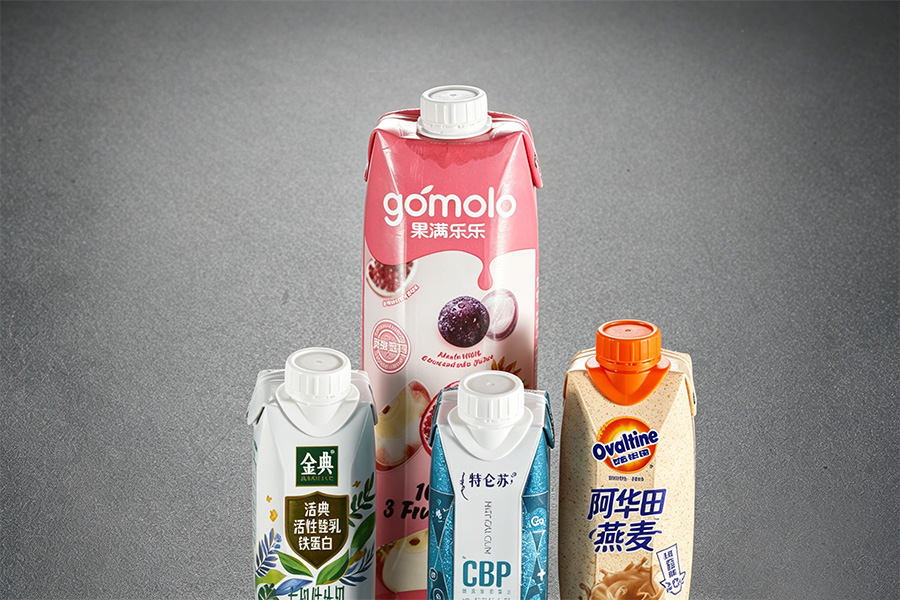
Yes. The carton and the thread may look the same across drinks, but the cap has different jobs to do. Juice needs a reseal tuned to the fruit content, dairy needs high barrier sealing for freshness, and RTD coffee needs heat stability and oxygen protection. All three use a threaded screw closure in food-grade PP, so the difference sits in sealing structure, opening size and opening torque.
Side-by-Side Comparison
| Feature | Juice Caps | Dairy Caps | RTD Coffee Caps |
| Main closure | Easy-open screw structure | Threaded screw fit | Threaded screw fit |
| Material | Food-grade PP | Food-grade PP | Food-grade PP |
| Main design focus | Stable sealing and tuned reseal | High barrier and sealing stability | Heat stability and oxygen barrier |
| Filling process | Aseptic filling and common sterilization | Pasteurization and UHT aseptic filling | Aseptic filling and high-temperature sterilization |
| Opening choices | Easy-open screw, wider openings for plant-based drinks | Standard screw, large-flow pour, wide opening | Helicap, StreamCap 27, DreamCap Pro, Mini DreamCap |
| Sealing detail | Sealing surface or lip, optional liner | Sealing lip, inner liner or plug core | Sealing lip and aroma-retaining inner liner |
| Typical drinks | NFC juice, mixed juice, plant-based, kids nutrition | Fresh milk, UHT milk, flavored milk, yogurt drinks | Black coffee, latte, mocha, flavored coffee |
Final fit still depends on your line and your carton spout, and compatibility should be confirmed by line testing before mass production.
Juice Carton Caps: Tuned to the Fruit
Juice is not one product. A cold-pressed NFC juice, a mixed fruit-vegetable drink, a plant-based beverage and a children nutrition juice behave differently in the carton and in the hand.
- NFC juice: a firmer reseal helps protect the product between pours.
- Mixed fruit-vegetable drinks: balanced opening torque.
- Plant-based beverages: wider openings suit the thicker body.
- Children nutrition juice: lower opening force makes the carton easy for small hands.
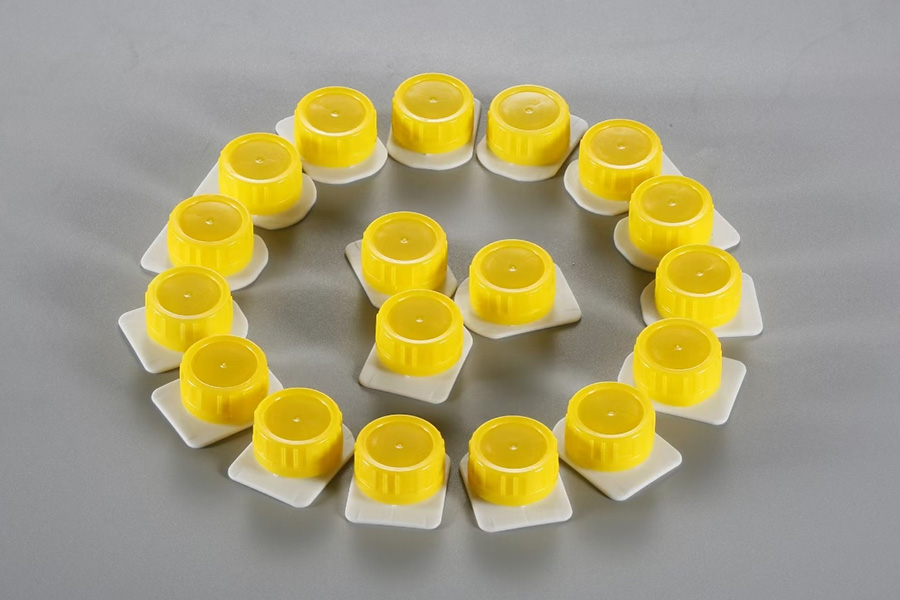
The juice carton caps use an easy-open screw structure with optimized thread engagement. They work with Brik, Fino, Slim, Prisma and Base 100B formats, subject to spout confirmation.
Dairy Carton Caps: Built for Barrier and Freshness
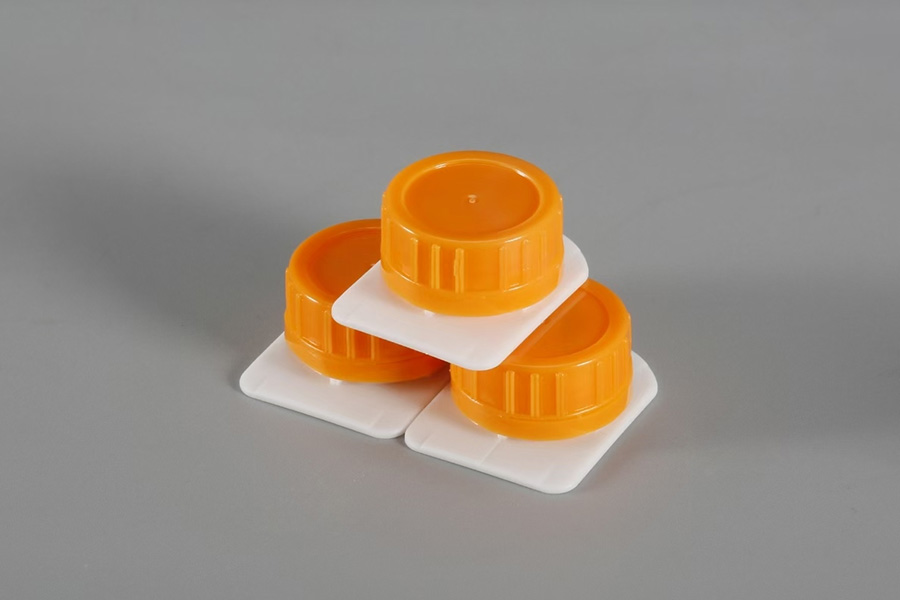
Milk and yogurt drinks are the most sensitive to storage. The dairy cap is designed for high barrier performance and sealing stability, to reduce leakage and flavor cross-contamination risk during storage.
Process fit
Compatible with pasteurization and UHT aseptic filling. The structure can be adapted to your sterilization media and filling temperature.
Opening choices
Standard screw caps, large-flow pour caps and wide-opening structures, selected by the product and the pour.
The cap is developed to customer drawings, samples or carton spout specifications rather than as a fixed stock product. See the full dairy carton caps page for formats from 80 ml to 1000 ml.
RTD Coffee Carton Caps: Heat and Aroma
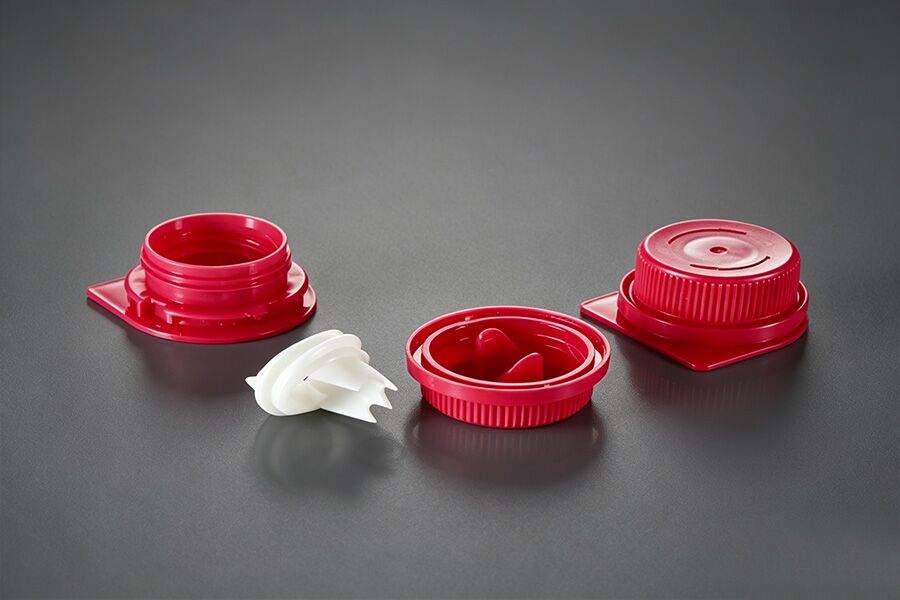
Milk-based coffee is sensitive to oxidation, and it is often filled hot. The RTD coffee cap uses a heat-stable PP outer body, a sealing lip and an inner liner described as an aroma retention layer. The sealing lip and liner form the main oxygen barrier.
Opening style matters too. Helicap gives a wider one-step opening, StreamCap 27 is a large-flow pour structure for milk-based formulas, DreamCap Pro offers a direct drinking spout with tethered reseal, and Mini DreamCap is compact. Browse RTD coffee carton caps for the full range.
What Stays the Same Across All Three
- Food-grade PP. All three use it, with the formula adjusted for sealing and filling needs.
- Threaded fit. Neck outer diameter, inner diameter, thread profile and cap height are confirmed before mass production.
- Testing. Each cap goes through internal sealing, torque and leakage testing.
- Customization. Pantone color, embossed, in-mold, pad or surface printing and opening torque are available, depending on MOQ and mold design.
- Carton formats. Brik, Prisma, Slim, Gemina and Base 100B are common, with Rex, Top, Fino and Stelo also listed.
Sealing Structures Explained
The words lip, liner and plug core appear across the product pages, and each does a different job. Knowing them helps you ask the right questions when you request samples.
| Part | What It Does | Where It Matters Most |
| Sealing lip | A molded ridge that presses against the spout to form the first seal | All three drinks, especially long storage |
| Inner liner | An extra layer inside the cap that improves sealing and can hold aroma | RTD coffee, where aroma and oxygen protection count |
| Plug core | An inner plug structure that fits into the spout opening | Dairy and other drinks where leakage and cross-contamination risk matter |
| Thread engagement | How far the thread turns before the cap seats | Juice, where reseal feel is tuned by juice type |
Which of these your cap uses is confirmed from the product drawing, so ask for it before approving samples.
Common Mistakes When Choosing a Carton Cap
- Choosing by price alone. A cap that seals poorly costs more in returns than it saves in unit price.
- Skipping line testing. Compatibility with your filling temperature and sterilization process should be confirmed on your own line.
- Ignoring the neck fit. Outer diameter, inner diameter, thread profile and cap height must match the spout, and small differences cause leaks.
- Copying another brand. A cap that suits a competitor milk may not suit your coffee or juice.
- Forgetting the consumer. Opening torque that is too high frustrates children and older customers, and too low risks leaks in transit.
Each of these is easier to avoid when the cap is developed to your drawing or sample from the start, with opening torque and sealing structure confirmed before mold work begins.
Why Opening Torque Is Set by Drink
Opening torque is the force needed to turn the cap on first opening. For every drink in this guide it is set to the customer requirement rather than fixed, because the right force depends on who is drinking and how the carton is used.
Juice
Children nutrition juice calls for lower opening force, while NFC juice uses a firmer reseal.
Dairy
Torque is balanced against sealing stability, so a cap resists leaks over long storage yet opens easily.
RTD coffee
Opening torque is set to your target, with large-flow openings matched to thicker milk-based formulas.
What to Send When You Request Samples
A short, complete brief speeds up development. Include the following so the cap can be matched to your drink and your line the first time.
- Carton format and volume: for example Brik, Prisma, Slim, Gemina or Base 100B, with the size in ml.
- Spout drawing or physical sample: used to confirm the neck fit.
- Drink type and viscosity: juice, milk, yogurt drink, coffee or plant-based.
- Filling temperature and sterilization method: pasteurization, UHT or high-temperature sterilization.
- Opening torque and opening style: twist, large-flow or flip.
- Branding needs: Pantone color and logo method.
Quotation is usually returned within 24 hours of a request, and 3D modeling and physical samples follow within 72 hours after the proposal is confirmed.
How to Decide Which Cap Your Drink Needs
Is your drink sensitive to oxygen or flavor loss?Look at the dairy or RTD coffee caps with liner and lip barrier structures.
Is it filled hot or sterilized at high temperature?Choose a heat-stable structure and confirm it on your line.
Is the drink thick or plant-based?Ask for a wider or large-flow opening.
Is the buyer a child or an on-the-go drinker?Consider lower opening force or a flip cap such as DreamCap.
Do you need a branded cap?Ask for custom color, logo and opening torque through OEM or ODM.
If none of the stock structures fit, the custom plastic caps and closures service covers custom mold, structural drawing and line-fit testing. For wider background, read our guide on aseptic carton packaging formats.
Frequently Asked Questions
Does the drink really change the carton cap I need?
Yes. The thread and carton can match, but sealing structure, opening size and torque change by drink. Juice, dairy and coffee each place different demands on the cap.
Can one cap be used for juice, milk and coffee?
Sometimes the same family and opening size is used, but each drink should be confirmed by line testing. Sealing, barrier and filling temperature requirements differ.
Which cap suits thick or plant-based drinks?
A wider or large-flow opening is generally recommended, and the juice range lists wider openings for plant-based beverages.
What material are these carton caps made from?
The juice, dairy and RTD coffee caps listed here use food-grade PP, with documents such as FDA 21 CFR or EU 10/2011 supplied only where the certificates are held.
How do I get a cap fitted to my carton and drink?
Send your carton spout drawing or sample, drink type, filling temperature and opening torque requirement. Samples and trial orders are available.