
 English
  русский
 عربى
عربى
Industry News
Content
- 1 What a Carton Cap Actually Is
- 2 Why Carbonation Changes the Requirements
- 3 Inside a CSD Carton Cap: Cross Section
- 4 Core Design Elements That Make a Cap CSD-Ready
- 5 CSD Carton Cap vs Standard Carton Cap
- 6 How Internal Pressure Builds Over a Shelf-Life Cycle
- 7 Common CSD Carton Cap Formats
- 8 Why Sealing Performance Matters More for CSD Than for Still Drinks
- 9 How to Choose the Right CSD Carton Cap
- 10 A CSD Carton Cap Built for Carbonated Lines
- 11 About the Manufacturer
- 12 Key Takeaway
A CSD carton cap is a screw-on or tethered closure engineered specifically to hold carbonation pressure inside a paperboard beverage carton without leaking, bulging or blowing off during storage and transport. Carbonated soft drinks need a different cap than still water or juice because the dissolved CO2 inside the package generates internal pressure that a standard carton closure was never designed to contain. Without the right cap, that pressure works against the seal every single day the package sits on a shelf, not just at the moment it is opened.
What a Carton Cap Actually Is
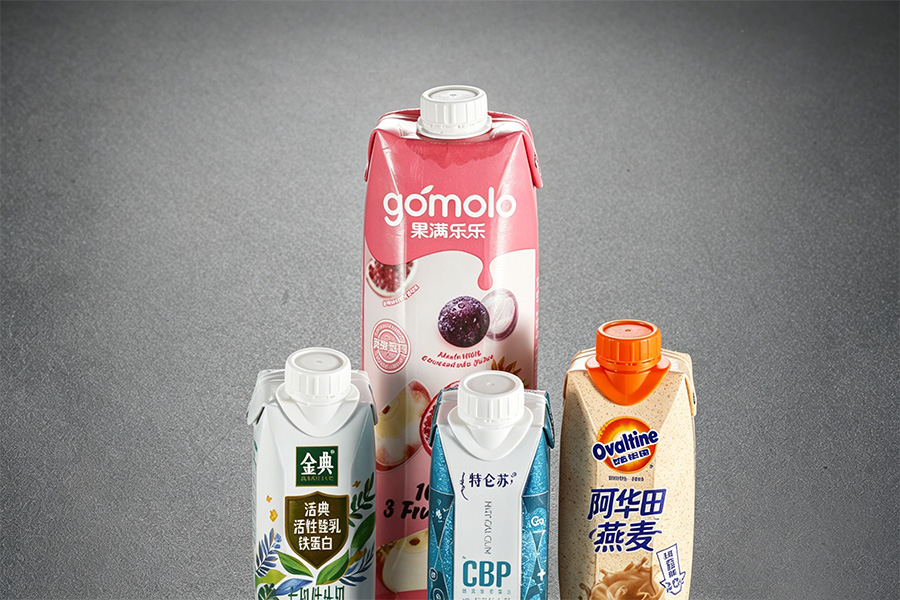
Beverage cartons, often referred to by the general public as Tetra Pak style packages, are built from layers of paperboard, aluminum foil and polyethylene laminated together to block light, oxygen and moisture. A carton cap is the small plastic closure fitted over a pre-cut opening in that laminate, usually attached after the carton is filled and sealed. The cap gives consumers a way to open, reclose and pour the product without tearing the carton itself, and it also acts as the last barrier protecting the contents once the factory seal is broken.
For non-carbonated products such as still water, juice or UHT milk, this closure mainly needs to manage liquid flow and keep contamination out after opening. The internal pressure of the package stays close to normal atmospheric pressure throughout its shelf life, so the cap does not need to resist any meaningful outward force while it sits sealed on the shelf. That changes completely once carbonation enters the picture.
Why Carbonation Changes the Requirements
Carbonated soft drinks are dosed with dissolved CO2 during processing, and that gas does not stay perfectly still inside the package. As temperature rises during transport or storage, some of the dissolved CO2 converts back into gas form, building pressure inside the headspace of the carton. A cap designed for still beverages has no mechanism to manage this pressure, which means it can be pushed outward from the inside every day the product sits in a warehouse or on a truck, not only at the instant a consumer twists it open.
This is the core reason CSD carton caps exist as a distinct product category rather than a smaller version of a standard cap. They are built with reinforced sealing geometry, tighter thread engagement and, in some designs, controlled venting features that manage internal pressure instead of simply resisting it until failure. A cap that looks identical on the outside to a still-beverage cap may not survive a single hot delivery truck cycle if it was not engineered for carbonation.
Temperature swings during distribution make this problem worse than most buyers expect. A carton that leaves a climate-controlled warehouse at a stable temperature can sit on an unrefrigerated loading dock, ride in a non-insulated trailer, and finally reach a retail shelf that fluctuates with store air conditioning cycles. Each of these stages changes the internal pressure slightly, and the cap has to hold its seal through all of them, not just through a single lab test at one fixed temperature.
Inside a CSD Carton Cap: Cross Section
Core Design Elements That Make a Cap CSD-Ready
Reinforced thread engagement to resist outward push from headspace pressure
A gasket or liner material rated for repeated pressure cycling, not just a single seal
Tamper evidence that stays intact even as internal pressure fluctuates with temperature
Controlled opening torque so the first twist does not cause a sudden gas release or foam spray
CSD Carton Cap vs Standard Carton Cap
| Factor | CSD Carton Cap | Standard Carton Cap |
| Internal pressure handled | Elevated, changes with temperature | Close to atmospheric |
| Thread and seal design | Reinforced, higher engagement | Standard engagement |
| Liner or gasket material | Rated for repeated pressure cycling | Rated for basic liquid contact |
| Opening behavior | Controlled gas release on first twist | Simple mechanical opening |
| Typical products | Sparkling water, carbonated juice drinks, CSD | Still water, milk, non-carbonated juice |
| Risk if wrong cap is used | Leakage, bulging, seal failure | Low risk, minimal pressure exposure |
How Internal Pressure Builds Over a Shelf-Life Cycle
Common CSD Carton Cap Formats
Bottlers generally choose between a few established cap formats depending on package size, drinking occasion and regulatory requirements in the target market. Screw-type closures remain the most common choice because the twisting motion allows for a controlled, gradual pressure release rather than an instant pop. Many markets now also require tethered designs, where the cap stays attached to the carton by a small plastic strap after opening, reducing loose plastic waste and aligning with extended producer responsibility regulations that have expanded across food and beverage packaging in recent years.
- Screw caps with tamper band: the standard choice for single-serve and family-size CSD cartons, offering repeatable open and reclose cycles.
- Tethered screw caps: functionally similar to a standard screw cap but permanently connected to the carton opening to meet cap-tethering regulations.
- Wide-neck caps: used on thicker or pulp-containing carbonated drinks where a larger pour opening improves flow without foaming excessively.
Why Sealing Performance Matters More for CSD Than for Still Drinks
A cap that leaks slightly on a still water carton might only cause minor product loss. On a carbonated product, the same small gap becomes an escape path for pressurized CO2, and once gas begins leaking, the drink flattens well before its intended shelf life ends. Flat carbonation is one of the most common consumer complaints in the CSD category, and in most cases the root cause is not the beverage formulation but a closure that was not matched correctly to the carbonation level of the product.
Beyond taste and fizz, a poorly matched cap can also create a safety concern. If pressure is allowed to build without any controlled venting path, the failure point tends to be sudden rather than gradual, which can result in the cap separating unexpectedly or the seal rupturing under stress during transport. This is why CSD carton caps are tested specifically under elevated temperature and pressure cycling rather than only under a single static seal test.
Filling line compatibility is another practical concern that is easy to overlook until it causes downtime. A cap that seals well in isolation but applies with inconsistent torque on a high-speed capping machine can create a batch of packages with uneven seal quality, where some units pass quality control and others fail later in the distribution chain. Working with a supplier that understands both the material science of the cap and the mechanics of high-speed capping equipment reduces this risk significantly.
How to Choose the Right CSD Carton Cap
Bottlers and packaging buyers evaluating carton caps for a carbonated product line should work through the following checklist before finalizing a supplier:
- Confirm the carbonation level of the product, since higher CO2 volumes require a cap rated for greater internal pressure.
- Match the cap neck diameter and thread profile precisely to the carton forming equipment already installed on the line.
- Check whether the target market requires a tethered cap under local packaging waste regulations.
- Ask for pressure cycling and elevated temperature test data specific to carbonated applications, not only still-beverage test results.
- Evaluate opening torque consistency, since a cap that is too tight frustrates consumers and one that is too loose risks slow leakage over time.
Getting each of these details right at the sourcing stage avoids costly line trials later, since a cap that fits the carton geometry but was never engineered for carbonation pressure will usually only reveal its weaknesses after the product has already left the factory.
A CSD Carton Cap Built for Carbonated Lines
For bottlers looking for a closure purpose-built for carbonated carton packaging, the CSD Carton Cap is designed around the pressure and sealing challenges covered in this article, combining reinforced thread engagement with a liner suited to repeated pressure cycling.
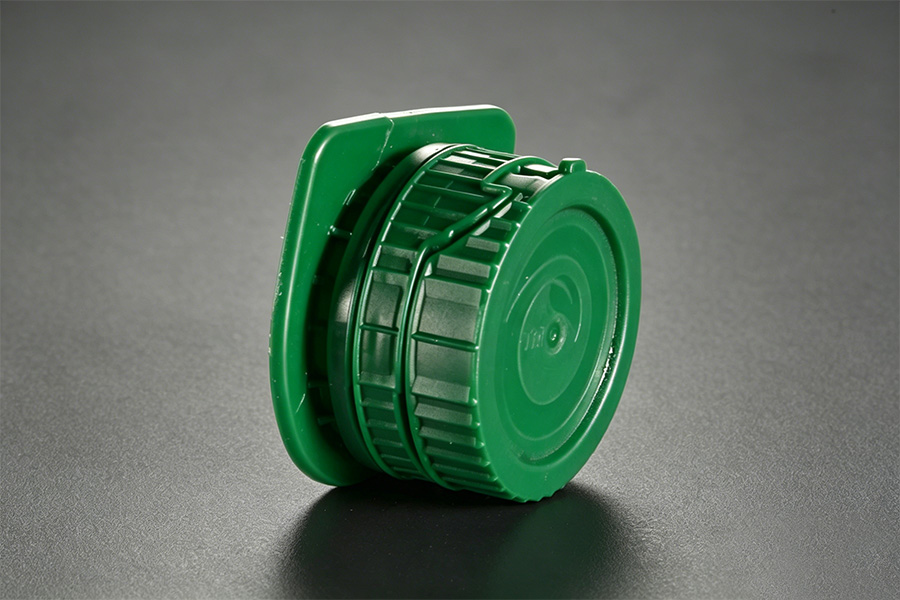
CSD Carton Caps
A plastic carton closure engineered specifically for carbonated soft drink packaging, built to hold internal pressure and maintain a reliable seal through storage and transport.
View Product DetailsAbout the Manufacturer
Lile (Taizhou) Technology Co., Ltd., formerly known as Taizhou Tars International Trade Co., Ltd, has been operating in the bottle cap industry since 1993. As a China-based plastic cap and closure manufacturer, the company focuses on continuous technological innovation and material research to supply safe, reliable and highly customized packaging solutions across beverage, food, cosmetic and pharmaceutical applications. That long-term focus on caps as a single product category, rather than as one item in a broader plastics catalog, is part of why closures for demanding applications such as carbonated carton packaging can be engineered with this level of attention to sealing and pressure performance.
Key Takeaway
A CSD carton cap is not a cosmetic variation of a standard closure. It is a functional component engineered around one specific problem: keeping carbonation pressure contained inside a paperboard package through storage, transport and shelf display. Choosing the right one protects product quality, prevents leakage and reduces the risk of packaging failure long before the drink ever reaches the consumer.