
 English
  русский
 عربى
عربى
Industry News
Home / Blogs / Industry News / HeliCap vs DreamCap: A Complete Buyer's Guide for Aseptic Carton Brands
Content
Choose HeliCap when your product is designed to be poured into a cup or glass, and choose DreamCap when your product is meant to be sipped directly from the carton. This single distinction, in-home pouring versus on-the-go drinking, drives nearly every other decision in the selection process, from neck diameter to package format to the physical shape of the spout itself.
This guide walks through both cap families in detail so brand owners and procurement teams can match the right closure to their package, their filling line, and their target consumer.
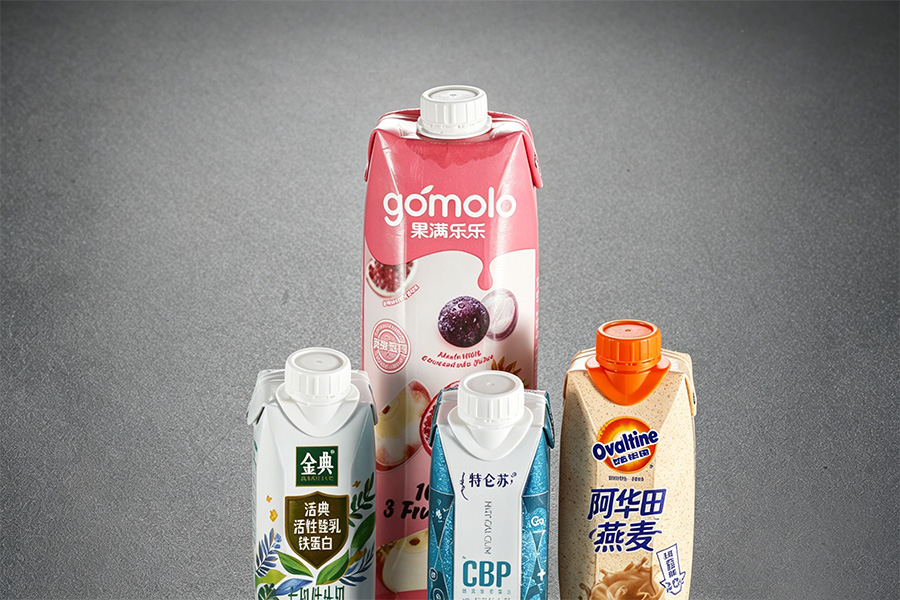
For aseptic carton beverages, the cap is not a minor accessory. It is the first physical interaction a consumer has with the product, it determines whether the package can be filled on a given production line, and it directly affects whether the brand can sell into markets with tethered cap regulations. Choosing the wrong cap family for a package format can mean redesigning packaging, reconfiguring filling equipment, or facing rejection from retailers with strict closure requirements.
HeliCap and DreamCap are the two most requested closure families for aseptic carton packaging, and while they share the same underlying commitment to seal integrity and food safety, they are engineered for different jobs.
HeliCap is a one-step screw cap built for pouring accuracy. Twisting the cap simultaneously breaks the inner seal and removes the closure, with no separate pull-tab step required. It comes in two neck sizes, each aimed at a different pouring scenario.
23 mm neck, suited to Slim, Fino, and Base carton formats. A common choice for retail dairy and juice packs where the cap size matches a compact, everyday package.
Wider opening for larger family-size cartons. Built for controlled pouring at the table, where flow rate and spill control matter more than portability.
Both sizes are available in Pro variants that add a tethered string, keeping the cap physically attached to the carton after opening to meet closure regulations in markets such as the European Union.
DreamCap takes a different design approach. Rather than optimizing for pouring, it is shaped for direct drinking from the carton. The high-neck, contoured spout is designed to sit comfortably against the lips, and the opening diameter is calibrated to control flow so the drinker does not gulp or spill while drinking on the move.
Ergonomic over-the-edge spout built for single-serve and on-the-go cartons, matched to Prisma-format packages.
Adds a screw-and-flip mechanism with a self-locking hinge, so the cap stays open hands-free while drinking, then closes again for later.
A smaller version of the same ergonomic concept, sized for kids' drinks, school portions, and other compact single-serve formats.
Because DreamCap is built around the drinking motion itself rather than pouring, it tends to perform better for brands targeting active, young, or convenience-driven consumers.
| Factor | HeliCap | DreamCap |
| Primary use case | Pouring into a cup or glass | Direct drinking from the carton |
| Neck diameter | 23 mm or 27 mm | 26 mm, 23 mm on Mini version |
| Package family | Brik Aseptic Slim, Fino, Base | Tetra Prisma Aseptic |
| Opening mechanism | One-step screw, twist to open | Ergonomic spout, screw or flip depending on version |
| Best consumer context | In-home, family table, retail dairy or juice | On-the-go, school, office, single-serve |
| Tethered option | HeliCap 23 Pro and 27 Pro | DreamCap Pro |
The chart below gives a relative view of how each cap family performs across the factors buyers weigh most heavily when selecting between the two.
Bar length reflects relative, qualitative suitability and is not drawn from a specific dataset.
Fitting a HeliCap screw cap on a small on-the-go single-serve pack, when the format and consumer expectation call for a drinking spout instead
Choosing a non-tethered cap for a market that is about to introduce tethering rules, leading to a costly changeover within a year or two
Committing to a cap model before confirming the filling line's applicator can handle that neck size and mechanism
There is no universally better cap between HeliCap and DreamCap, only a better fit for a given package and consumer. Use HeliCap for pourable, in-home, and family-size formats, and use DreamCap for single-serve, on-the-go formats meant to be sipped directly from the carton. Once that core decision is made, layer in tethering requirements and sustainability material choices based on your target markets, and confirm applicator compatibility with your filling line before placing an order.
If you have any questions, please fill out the contact form at the bottom of the page and contact us.
© Lile (Taizhou) Technology Co., Ltd.
Toudao Town, Taizhou City, Zhejiang Province, China.
liletz@163.com
+8613706571648