
 English
  русский
 عربى
عربى
Industry News
Home / Blogs / Industry News / Aseptic Carton Packaging Formats: Types, Uses & Closure Selection Guide
Content
Your formula is finalized, the filling line is quoted, and then comes the decision that shapes almost everything downstream: choosing an aseptic carton packaging format. Gable top, brick, slim, prism, or flat top, each geometry changes how the product is sterilized, how much shelf space it occupies, how the cap fits, and how the consumer opens, pours, and stores the pack. Select the right format and your launch stays on schedule. Select poorly and you face line retrofits, wasted packaging inventory, and a closure that fights your pack instead of completing it. That is why format selection should happen early and deliberately, ideally with an understanding of how the closure will integrate with the chosen structure.
Aseptic carton packaging formats are the structural shapes and dimensional systems used to pack liquid food products under sterile conditions so they can be stored without refrigeration. Every format shares a common material family: roughly 70 percent paperboard for stiffness, a thin aluminum micro-layer that blocks oxygen and light, and polyethylene layers that provide moisture sealing and heat-sealability. What separates one format from another is geometry: the height-to-width ratio, the opening diameter, the position of the neck finish, and the headspace left after filling.
Aseptic formats fall into two broad families. Shelf-stable cartons carry a complete barrier structure (paperboard, polyethylene, and aluminum) and are filled in a sterile enclosure, so they remain fresh for months without cooling. Refrigerated cartons, such as the familiar gable-top milk pack, use a lighter barrier and rely on the cold chain from filler to retail shelf. The format you choose places your product firmly in one of these two supply-chain worlds.
That geometry is not cosmetic. A slim 200 ml carton uses different filling nozzles and sealing tools than a 1-liter base carton. The format fixes the size of the opening, which in turn fixes the cap diameter and thread profile you can use. It also determines how the carton behaves under internal pressure, how easily the consumer pours, and whether a large pack needs a second grip point.
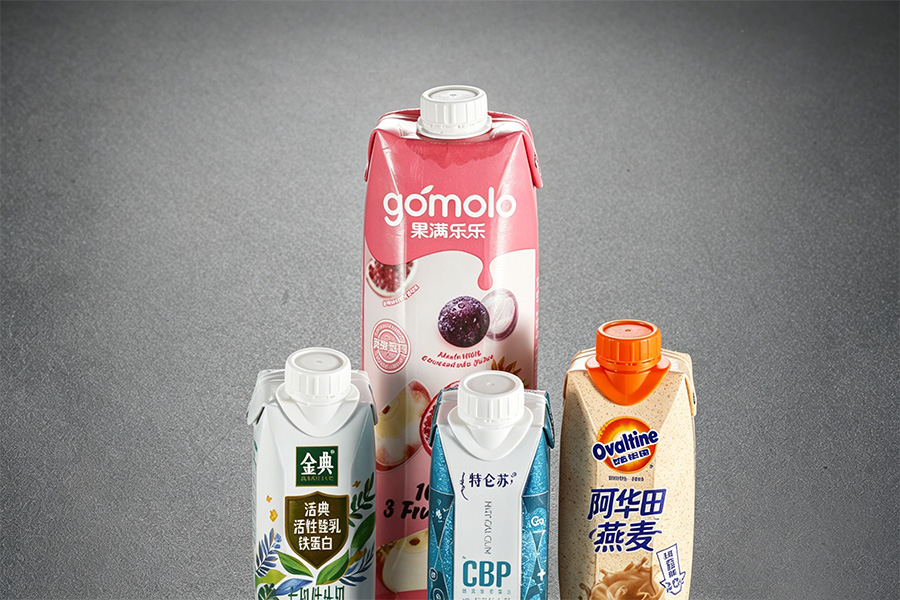 Aseptic Carton Packaging Formats and Supply CapabilitiesThis overview explains how carton geometry affects filling, sealing, and cap selection, and summarizes five major aseptic formats with compatible roll-fed materials and closure options for quick quotation.View Product →
Although suppliers offer many proprietary shapes, the majority of aseptic cartons in the market fall into five recognizable format families. The table below summarizes their typical volume ranges, product uses, and the opening styles most often paired with each.
| Format | Typical Volume | Common Applications | Typical Opening |
|---|---|---|---|
| Gable top | 250 ml – 1 L | Fresh milk, cream, juice | Screw cap or flip-top |
| Brick (base) | 200 ml – 1 L | UHT milk, soy drinks, soups | Reclosable screw cap |
| Slim | 125 – 330 ml | RTD coffee, flavored milk, children's drinks | Small-diameter screw cap |
| Prism | 300 – 500 ml | Premium juice, tea, sports drinks | Flip-top or wide screw cap |
| Flat top | 200 – 500 ml | Plant-based beverages, dairy | Wide screw cap |
The gable top remains the most recognizable format for refrigerated dairy, while brick and slim formats dominate shelf-stable categories. Prism and flat-top formats are increasingly chosen by brands that want a distinct shelf silhouette or a larger cap surface for branding.
The best format is the one that fits your product's physical characteristics and consumption occasion. Use this quick reference to shortlist your options before you talk to filling-line suppliers.
Choose formats with pressure-rated seams and venting-cap compatibility. Standard gable tops deform under internal CO2 pressure.
Sauces, concentrates, and smoothies need wide-mouth formats with large-orifice spouts. Narrow necks create slow pours and product waste.
Slim or small brick formats between 125 ml and 250 ml pair best with compact one-hand flip-top caps for drinking while moving.
A 1-liter base carton with an ergonomic screw cap suits products consumed repeatedly from the refrigerator, where reclosure reliability matters more than portability.
Prism or custom-shaped formats with matte paperboard and distinctive cap finishes support higher shelf visibility and perceived value.
Oxygen-sensitive products benefit from formats with a full aluminum barrier and a tamper-evident closure that supports frequent opening and reclosure.
For dairy and plant-based drinks, the closure is part of the freshness equation, not an afterthought. That is why we design dairy-specific carton caps to maintain sealing integrity after repeated use, as part of a complete aseptic packaging approach.
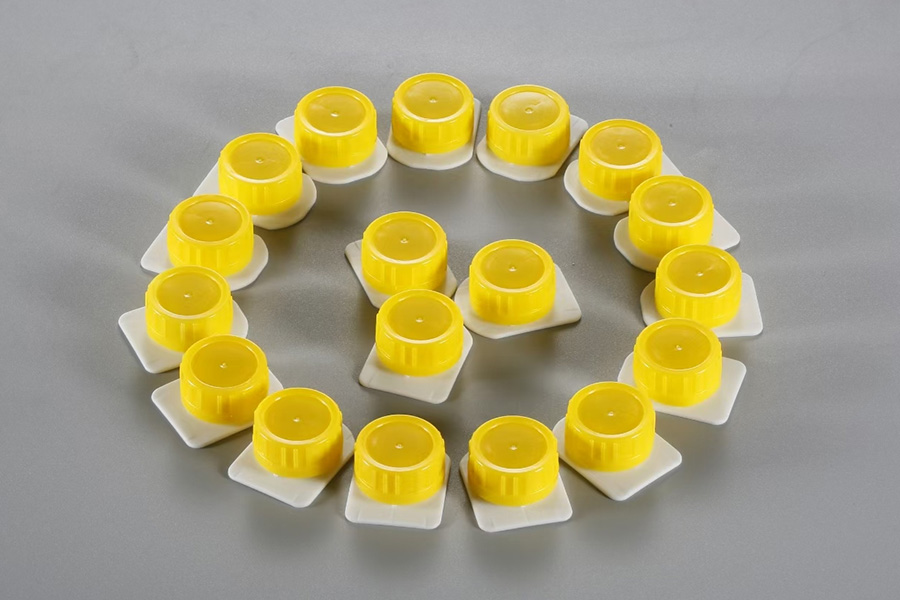 Dairy-Specific Carton Caps for Aseptic PackagingThese food-grade PP caps are engineered for dairy products like UHT milk and yogurt drinks, with high sealing stability and options for screw, pour, or wide-open structures.View Product →
The carton format sets the vessel, but the closure does the daily work. An aseptic carton is only as reliable as its sealing and reclosure system. Screw caps deliver the strongest reseal and are the default for shelf-stable formats. Flip-tops add one-hand convenience and are favored for single-serve packs. Pull-off foils maximize the opening area but offer no reclosure.
Cap selection begins with the neck finish molded into the top of the carton. A 38 mm screw thread is a widely used standard across many aseptic formats, so the same cap body can serve multiple volumes and product categories. Automated filling lines also favor caps that tolerate high application torque without deforming the carton top, because a distorted neck finish quickly turns into leakage in distribution. Our screw-cap versus flip-top comparison walks through these trade-offs in detail.
Because we manufacture closures and supply aseptic packaging materials side by side, we can tune thread geometry, sealing layers, and tamper-evident rings to the exact format and filling machine you are using. Our precision molding capabilities allow us to hold tight tolerances on the sealing surface, which is where most leakage problems start. If your juice blend is sensitive to oxygen ingress, for instance, we can supply a juice carton cap with an extra barrier layer in the liner.
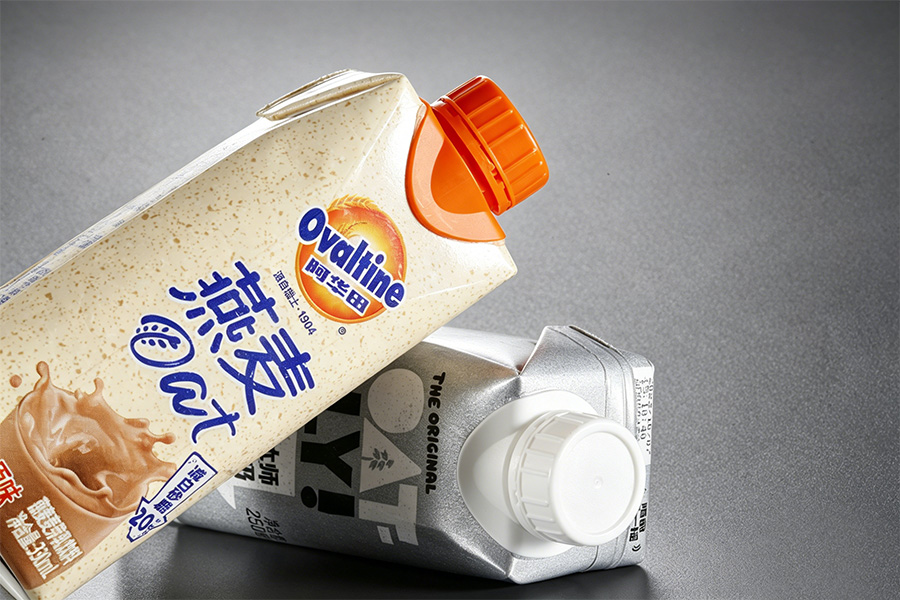 Juice Carton Caps with Customizable Sealing FeaturesDesigned for beverage brands, these PP caps offer easy-open screw structures and compatibility with common aseptic formats, with options for barrier liners and full customization.View Product →
Format innovation today is largely driven by recyclability and material reduction. Multi-layer aseptic cartons have historically been difficult to recycle because the aluminum and polyethylene layers must be separated from the paperboard fibers. Newer formats replace the aluminum layer with high-barrier polymer coatings, and some incorporate bio-based polyethylene. These changes affect stiffness, oxygen barrier, and heat-seal behavior, so they cannot be adopted without revalidating the entire package.
Closures contribute to sustainability as well. Lightweight caps reduce plastic per pack, and tethered caps keep the closure attached to the carton through disposal, improving recycling rates and aligning with European packaging regulations. Because aseptic packaging eliminates the cold chain, the format also cuts transport energy significantly, but only when you choose the smallest efficient size and a closure with a low material footprint.
What is the difference between an aseptic carton and a regular carton?
An aseptic carton uses additional barrier layers and is filled in a sterilized environment, allowing the product to remain shelf-stable without refrigeration. A regular carton typically holds chilled products and depends on the cold chain throughout distribution.
Which aseptic format is best for single-serve beverages?
Slim and small brick formats between 125 ml and 250 ml are the standard for single servings. They pair with compact screw caps or flip-tops for convenient drinking on the move.
Can the same cap fit different carton formats?
Only if the neck finish is identical. A 38 mm screw thread appears across many formats, but cap height, liner type, and tamper-evident ring design still need to match both the filling line and the product characteristics.
Are aseptic cartons recyclable?
Yes, but the recycling path depends on the material structure. Formats with an aluminum layer require specialized separation facilities, while aluminum-free barrier formats are accepted by more mainstream paper-recycling streams.
If you have any questions, please fill out the contact form at the bottom of the page and contact us.
© Lile (Taizhou) Technology Co., Ltd.
Toudao Town, Taizhou City, Zhejiang Province, China.
liletz@163.com
+8613706571648