
 English
  русский
 عربى
عربى
Industry News
Home / Blogs / Industry News / Water Bottle Cap Types Explained: The Complete Guide for Choosing the Right Cap
Content
You pick up a bottle of water, twist off the cap, take a sip, and put it back in your bag. That cap seems like a minor component, but it determines whether the bottle leaks, whether the water stays fresh, and how easily the consumer can drink. For beverage brands and bottlers, selecting the right water bottle cap type is a decision that affects packaging line efficiency, product shelf life, and regulatory acceptance. This guide walks through the common cap types, what they are designed for, and how to choose the right one for your product.
Different cap styles exist because they solve different problems. Here is a quick reference for the most common water bottle cap types.
A threaded cap that screws on and off. Best for still and lightly sparkling water, offering tight resealing.
Flip-top valve with a pop-up spout for one-handed drinking during workouts and outdoor activity.
Pull the spout up to drink, push it down to close. Common on reusable sports bottles.
A hinged lid that flips open. Easy to operate, ideal for on-the-go convenience.
Pressed directly onto the bottle neck without threads. Inexpensive but less secure for carbonated water.
Stays attached to the bottle after opening. Required under EU single-use plastic rules.
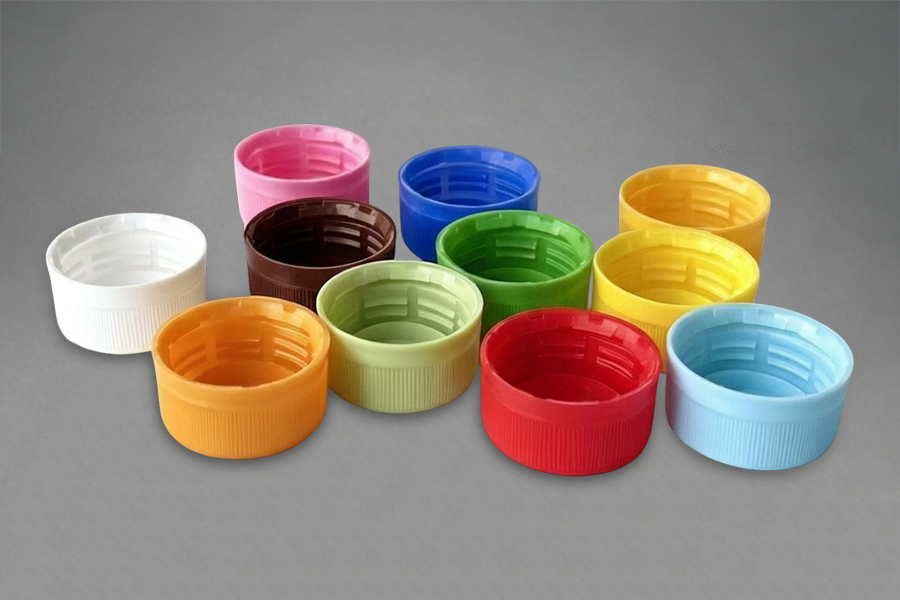
Screw caps dominate the water bottle market because they are simple, reliable, and compatible with high-speed capping machines. The cap has internal threads that engage with the bottle neck finish; tightening the cap compresses the sealing surface to prevent leakage. Most screw caps are made from polypropylene (PP) or high-density polyethylene (HDPE).
The most common neck finishes for water bottles are 28mm and 30mm. A 28mm cap fits narrow-neck bottles and is the default for single-serve PET water bottles. A 30mm cap provides a wider opening, which can improve pour flow and is often used for larger bottles or enhanced water products. Choosing the wrong neck finish creates sealing gaps, leaks, or capping machine jams. That is why you should always measure the finish before sourcing caps. If your product line covers both small and large formats, you may need to stock multiple cap types to match each bottle.
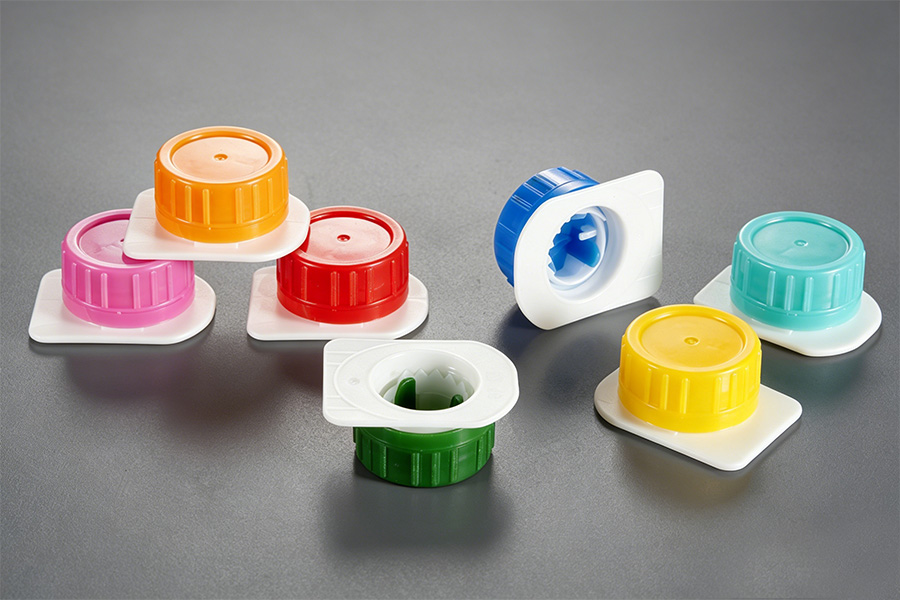 28mm Tamper-Evident Screw Caps for PET Water BottlesThese food-grade PP caps cover PCO 1810 and PCO 1881 neck finishes, matching common preforms without retooling. The tear band shows tamper evidence, ideal for mineral water and still beverages.View Product →
Thread design matters as well. Standard water bottles typically use a continuous thread profile, while carbonated water requires a deeper thread and a thicker sealing ring to handle internal pressure. The cap's inner liner, if it has one, provides the actual barrier. Linerless designs use a land seal or molded geometry inside the cap itself, which reduces material usage and simplifies recycling.
For a detailed breakdown of how different neck finishes compare, see our guide on matching cap sizes to bottle necks.
Sports caps are designed for one-handed operation and quick access to water during exercise. The two dominant styles are push-pull caps and pop-up caps. A push-pull cap has a spout that you pull up with your teeth or fingers; a pop-up cap has a spring-assisted flap that opens when you press a button or flip a lever.
These caps use the same neck finishes as screw caps, but the internal valve assembly requires more precision. A poorly designed valve can leak during impact or slow down the flow rate. For athletes, a cap that opens easily and reseals securely is more important than appearance. Some sports caps feature a self-draining nozzle to reduce bacterial growth, making them suitable for reusable bottles.
If your product targets gym-goers or commuters, a sports cap can differentiate your brand even if the water itself is unchanged. For still water and low-viscosity beverages, the valve holds up well; for carbonated drinks, you need a pressure-rated sports cap to avoid internal pressure pushing the valve open.
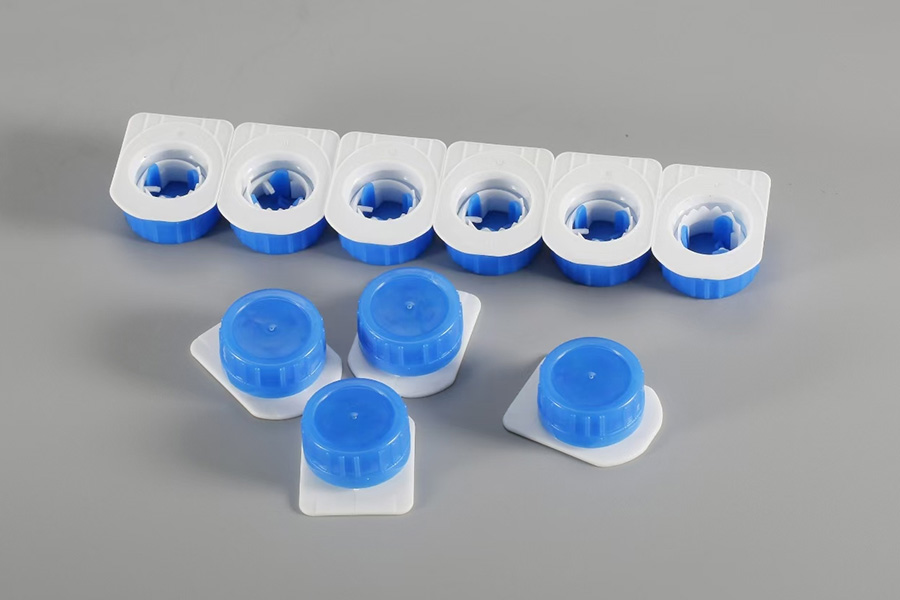 Sports Pop-Up Water Caps for One-Handed DrinkingFeaturing push-pull or pop-up openings, these caps allow one-handed use during sports or outdoor activities. They include optional dust covers and tamper-evident options, suitable for sports and functional drinks.View Product →
Not every water bottle uses a threaded cap. Flip-top caps use a hinge and snap shut; they are extremely easy to open with one hand and are common on single-serve water bottles in children's lunchboxes. Snap-on caps are pushed directly onto the bottle neck; they are inexpensive but less secure, so they appear mostly on disposable convenience products.
Tethered caps have become more important in recent years. The European Union's Single-Use Plastics Directive requires caps of beverage containers up to 3 liters to remain attached after opening. A tethered cap reduces litter, but the hinge geometry must allow the cap to stay out of the way while drinking while still closing tightly.
These cap types differ by more than the opening mechanism. The table below summarizes their main characteristics.
| Cap type | Opening method | Sealing reliability | Best for |
|---|---|---|---|
| Flip-top | Flip the hinged lid open | Good with inner seal ring | On-the-go convenience, kids' bottles |
| Snap-on | Pop the cap off | Moderate; may loosen over time | Low-cost disposable water bottles |
| Tethered | Screw or flip, remains attached | Good if hinge and thread are well designed | EU-compliant single-use bottles |
Choosing a cap is not just about appearance. Use the following steps to match the cap to your filling line and target consumer.
Our factory can help you test cap prototypes on your actual bottles. You can learn more about our manufacturing and testing facility if you need first-hand verification before ordering.
30mm Tamper-Evident Screw Caps for Large PET BottlesDesigned for 30mm neck finishes, these PP caps suit large-diameter bottles and high-speed filling lines. They offer liner options for ambient, hot-filled, or carbonated drinks, with a standard tear band for tamper evidence.View Product →The cap material must protect the water from contamination, preserve taste, and survive transportation. Polypropylene (PP) is the most widely used material for water bottle caps because it offers a good balance of stiffness, chemical resistance, and cost. Polyethylene (PE) is softer and often used for linerless caps that must deform slightly to create a seal.
Sealing performance depends on more than the material. The cap's internal geometry, the finish dimensions, and the capping torque all contribute. A common failure is cap back-off, where the cap loosens during transport due to vibration. This can be mitigated with a tamper-evident band, longer thread engagement, or a stiffer cap design.
For flavored or vitamin-enhanced water, the cap must resist chemical interaction with the additives. When you work with a custom cap manufacturer, specify the actual beverage formulation so the material and closure system can be validated for contact compatibility.
What is the most common water bottle cap size?
The 28mm cap is the most common size for single-serve still water bottles. Many bottled water brands also use 30mm for larger formats or products that need a wider mouth.
Can I reuse water bottle caps?
Reusing a disposable plastic cap is not recommended because the sealing surface can wear out and harbor bacteria. For reusable bottles, use a cap designed for repeated opening and washing.
What is a tethered cap and why is it required?
A tethered cap stays attached to the bottle after opening. It is required for single-use beverage containers under the EU Single-Use Plastics Directive to reduce litter from lost caps.
How do I choose between a screw cap and a sports cap?
Choose a screw cap for standard resealing and shelf stability. Choose a sports cap when your consumers need one-handed drinking without removing the cap, such as during workouts.
The right water bottle cap type is the result of analyzing your bottle neck, filling conditions, consumer habits, and regulatory environment. A cap that looks identical on the outside can perform very differently depending on material and geometry. By understanding the common types and what drives their performance, you can make a more confident sourcing decision.
If you have any questions, please fill out the contact form at the bottom of the page and contact us.
© Lile (Taizhou) Technology Co., Ltd.
Toudao Town, Taizhou City, Zhejiang Province, China.
liletz@163.com
+8613706571648