
 English
  русский
 عربى
عربى
Industry News
Content
- 1 The Main Types of Juice Bottle Caps
- 2 Match the Cap to Your Bottle's Neck Finish
- 3 Consider Your Juice Formula — Acid, Pulp, and Carbonation Matter
- 4 Sealing Performance and Shelf Life Targets
- 5 Cap Material Comparison: PP vs. HDPE vs. Aluminum
- 6 Tamper Evidence and Food Safety Compliance
- 7 Sustainability: What to Look for in an Eco-Friendly Cap
- 8 Common Mistakes to Avoid When Choosing a Juice Cap
- 9 How to Test and Validate Your Cap Before Full Production
- 10 Quick Reference Checklist for Choosing the Right Juice Cap
- 11 Why Partner with an Experienced Bottle Cap Manufacturer
Choosing the right juice bottle cap comes down to four core factors: bottle compatibility, juice type, sealing performance, and end-user experience. Get these right, and you protect product freshness, meet food safety regulations, and build consumer trust. Get them wrong, and you risk leaks, spoilage, and compliance failures. This guide walks you through every decision point with practical data and real-world examples.
The Main Types of Juice Bottle Caps
Not all caps are interchangeable. Each type is engineered for specific use cases, and selecting the wrong format is one of the most common and costly mistakes in beverage packaging.
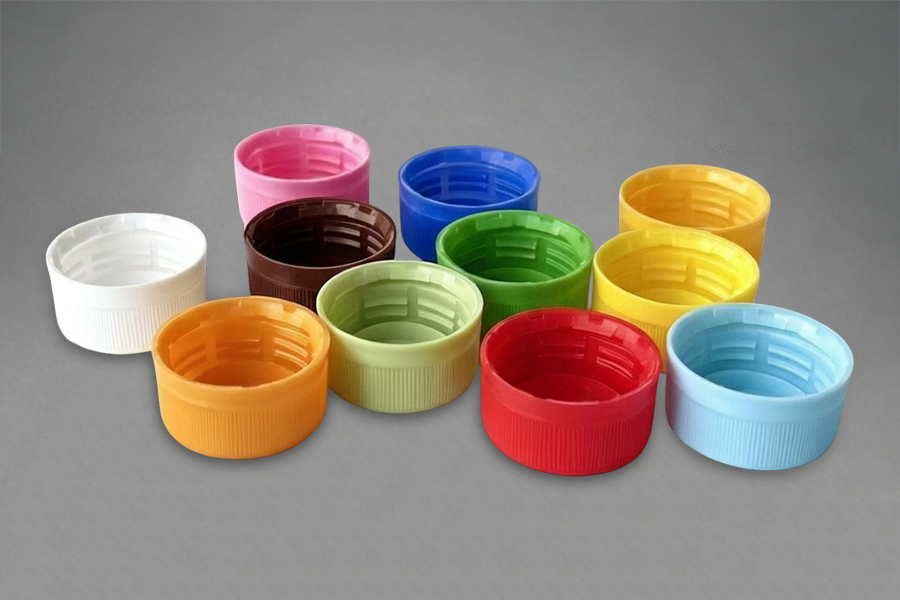
- Screw caps (CRC / tamper-evident): The most widely used format for PET and glass juice bottles. A tamper-evident band provides a visible broken seal on first opening — a legal requirement in many markets.
- Snap-on / press-on caps: Common for wide-mouth bottles and cold-fill juice products. Lower tooling cost but offer less reseal performance.
- Flip-top / sports caps: Preferred for on-the-go juice drinks and children's beverages. The one-handed open mechanism improves user convenience but requires a higher application torque to maintain seal integrity.
- Child-resistant caps: Mandatory for juice products containing additives or functional ingredients classified as supplements in regulated markets (e.g., the US PPPA standard).
- Induction / foil seal caps: Used as a secondary barrier under the outer cap for extended ambient shelf life. Particularly effective for cold-pressed or HPP juices where oxygen ingress must be kept below 0.01 ppm.
Match the Cap to Your Bottle's Neck Finish
Thread compatibility is non-negotiable. A cap that does not match the bottle's neck finish will either under-torque (causing leaks) or over-torque (causing cap distortion). Neck finishes are standardized by the Society of the Plastics Industry (SPI) and measured in millimeters.
| Neck Diameter | Typical Bottle Type | Common Cap Format | Recommended Torque |
|---|---|---|---|
| 28 mm | Standard PET juice (250–500 ml) | Screw cap / tamper-evident | 10–14 N·m |
| 38 mm | Wide-mouth glass / HDPE | Lug cap / snap-on | 14–18 N·m |
| 48 mm | Juice jars / family-size bottles | Continuous thread screw | 18–22 N·m |
| 20 mm | Single-serve sport / kids | Flip-top / sports cap | 8–12 N·m |
Always request a neck finish specification sheet from your bottle supplier before ordering caps. Even a 0.5 mm mismatch in thread pitch can result in a failed seal on a high-speed filling line.
Consider Your Juice Formula — Acid, Pulp, and Carbonation Matter
The chemical and physical properties of your juice directly affect which cap material and liner you should use.
High-Acid Juices (pH below 4.0)
Citrus juices — orange, lemon, grapefruit — typically have a pH between 2.5 and 3.5. At this acidity level, standard polyethylene (PE) liners can degrade over time, leading to off-flavors and seal failure. For these products, use expanded polyethylene (EPE) foam liners or polyethylene terephthalate (PET) liners rated for high-acid contact.
Pulpy and High-Viscosity Juices
Juices with visible pulp (e.g., fresh-squeezed orange or tomato juice) require caps with a wider bore or a vented design to prevent pressure buildup during pouring. A standard narrow-bore flip-top cap, for example, will restrict flow and frustrate consumers.
Carbonated Juice Drinks
Sparkling juice or juice-soda blends require caps rated for internal pressure. A standard screw cap for still beverages will fail under the 2–4 bar internal pressure typical of carbonated drinks. Use pressure-rated closures with a minimum wall thickness of 2.5 mm and a carbon dioxide (CO₂)-resistant liner.
Sealing Performance and Shelf Life Targets
Sealing performance determines how long your juice stays fresh — and it must align with your distribution model.
- Refrigerated, short shelf life (7–21 days): A standard PE-lined screw cap is typically sufficient. Focus on application torque consistency on the filling line rather than advanced barrier materials.
- Chilled extended shelf life (30–90 days): Consider an induction-sealed foil liner under the primary cap. This reduces oxygen transmission to near zero and is standard practice for premium cold-pressed juice brands.
- Ambient shelf life (6–12 months): Hot-fill processes (typically at 85–95°C) require heat-resistant polypropylene (PP) caps that can withstand thermal deformation. Always validate caps at your specific fill temperature, not just at room temperature.
- HPP (High Pressure Processing) juices: HPP subjects bottles to pressures up to 600 MPa. Only caps specifically validated for HPP cycles should be used — standard caps can deform or lose their seal integrity under these conditions.
Cap Material Comparison: PP vs. HDPE vs. Aluminum
The cap body material affects chemical resistance, temperature tolerance, recyclability, and cost. The three dominant materials for juice bottle caps are polypropylene (PP), high-density polyethylene (HDPE), and aluminum.
| Material | Temp. Resistance | Acid Resistance | Recyclability | Relative Cost | Best For |
|---|---|---|---|---|---|
| PP | Up to 120°C | Excellent | Yes (widely) | Low–Medium | Hot-fill, ambient juice |
| HDPE | Up to 80°C | Good | Yes (widely) | Low | Cold-fill, refrigerated juice |
| Aluminum | Up to 150°C | Excellent (lined) | Yes (infinitely) | High | Premium glass bottle juice |
For most mainstream juice brands using PET bottles, PP is the default choice — it balances cost, heat resistance, and recyclability. HDPE is preferred for cold-chain products where lower processing temperatures are the norm. Aluminum commands a price premium but signals quality and is infinitely recyclable, making it attractive for sustainability-focused brands.
Tamper Evidence and Food Safety Compliance
Tamper-evident features are not optional — they are a legal requirement in most major markets for juice and beverage packaging.
- EU Regulation (EU) 2022/1616: Requires that caps on plastic beverage bottles remain tethered to the bottle after opening (tethered cap mandate), effective from July 2024 for bottles up to 3 liters.
- US FDA 21 CFR: Requires tamper-evident packaging for all over-the-counter food products sold in retail. A broken or missing tamper band should be immediately visible to consumers.
- China GB standards: GB 4806.7 governs plastic materials in food contact, including cap liners. All liner materials must be listed and compliant.
If you export to multiple regions, work with a cap manufacturer who can provide multi-market compliance documentation — including FDA, EU food contact, and China GB certifications — from a single supply source.
Sustainability: What to Look for in an Eco-Friendly Cap
Sustainability is now a procurement criterion, not just a marketing statement. When evaluating cap options:
- Monomaterial design: Caps made entirely from one resin type (e.g., 100% PP) are far easier to recycle than multi-material closures. Avoid caps with metal inserts unless the application absolutely demands it.
- Recycled content: Post-consumer recycled (PCR) PP and HDPE are increasingly available for cap production. Leading brands are targeting 25–50% PCR content in closures by 2025–2030 in line with EU packaging regulations.
- Lightweighting: Reducing cap weight by even 1–2 grams per unit translates to significant material savings at scale. For a production run of 10 million units, a 1.5 g reduction saves 15 metric tons of plastic.
- Bio-based resins: Bio-PP derived from sugarcane is commercially available and functionally equivalent to fossil-based PP, with a significantly lower carbon footprint.
Common Mistakes to Avoid When Choosing a Juice Cap
- Ordering caps before confirming neck finish specs. Always get the precise neck finish drawing (thread type, diameter, height) from your bottle supplier first.
- Ignoring fill temperature during validation. A cap approved at room temperature may deform at 88°C hot-fill. Test under actual production conditions.
- Using the same cap for hot-fill and cold-fill lines. Thermal cycling stresses the cap differently — use process-specific closures.
- Underestimating torque variation on high-speed lines. At filling speeds above 600 BPM (bottles per minute), torque inconsistency becomes a major source of leaks. Validate application torque statistically across a full production run.
- Selecting a cap based on price alone. A cap that costs 20% less but causes 0.5% leakage on a 10 million-unit run creates far greater losses in product waste, returns, and brand damage than the initial savings justify.
How to Test and Validate Your Cap Before Full Production
Never scale to full production without completing a structured validation protocol. At minimum, the following tests should be performed:
- Torque testing: Measure both application torque (how tightly the cap is applied) and removal torque (force needed to open). The removal torque should be within 30–70% of the application torque after 24 hours.
- Leak / pressure testing: Submerge capped bottles in water under pressure (typically 30–50 kPa for still juice, higher for carbonated). No bubbles should appear within 30 seconds.
- Drop testing: Drop filled and capped bottles from 1.2 m height onto a hard surface from multiple orientations. No leakage should occur.
- Accelerated shelf-life testing: Store capped bottles at elevated temperature and humidity (e.g., 40°C / 75% RH) for a defined period and evaluate seal integrity, cap deformation, and product quality.
- Migration testing: For food contact compliance, test that cap liner materials do not transfer harmful substances into the juice product above regulatory limits.
Quick Reference Checklist for Choosing the Right Juice Cap
- Confirm bottle neck finish diameter and thread type
- Identify juice pH, viscosity, and carbonation level
- Define fill process: hot-fill, cold-fill, or HPP
- Set shelf life target and distribution channel (ambient, chilled, frozen)
- Verify tamper-evidence and food safety compliance for target markets
- Select cap material (PP / HDPE / aluminum) based on process and sustainability goals
- Evaluate branding requirements: color, finish, tethered cap design
- Complete torque, leak, drop, and shelf-life validation before scale-up
Why Partner with an Experienced Bottle Cap Manufacturer
Selecting the right cap is only half of the equation — the other half is sourcing from a manufacturer capable of delivering consistent quality at scale, with full traceability and compliance documentation.
Lile (Taizhou) Technology Co., Ltd. has been a specialized bottle cap and plastic closure manufacturer since 1993, operating under the core principle of "craftsmanship, quality first." With over 30 product varieties and an annual production capacity exceeding 800 million units, Lile supplies plastic bottle closures across beverage, food, cosmetics, and pharmaceutical sectors worldwide.
What sets Lile apart is its end-to-end supply chain infrastructure — covering raw material procurement, precision manufacturing, and logistics — ensuring consistent lead times and product quality regardless of order volume. Every closure is produced under a full product traceability system, recording raw material origins, manufacturing parameters, and quality control results for complete supply chain transparency.
The entire Lile supply chain is certified by independent third-party organizations, providing objective verification of quality compliance for customers in regulated markets. Whether you need a standard 28 mm tamper-evident screw cap for a PET juice line or a fully customized closure solution for a premium glass bottle range, Lile provides the technical expertise, production capacity, and certified supply chain to deliver — reliably and at scale.