
 English
  русский
 عربى
عربى
Industry News
Content
- 1 The short answer
- 2 What is PCO 1810
- 3 What is PCO 1881
- 4 The difference between PCO 1810 and PCO 1881
- 4.1 Can I tell them apart just by looking at the bottle?
- 4.2 Which one seals better under pressure?
- 4.3 Which one costs less and uses less plastic?
- 4.4 Which finish is my existing bottle or line already using?
- 4.5 Is one of them becoming outdated, and does that matter to me?
- 4.6 Full parameter comparison
- 5 Why the industry moved toward PCO 1881
- 6 Which one fits your product line
- 7 Compatibility and switching considerations
- 8 FAQ
- 9 Choosing the right partner for PCO 1810 and PCO 1881 caps
The short answer
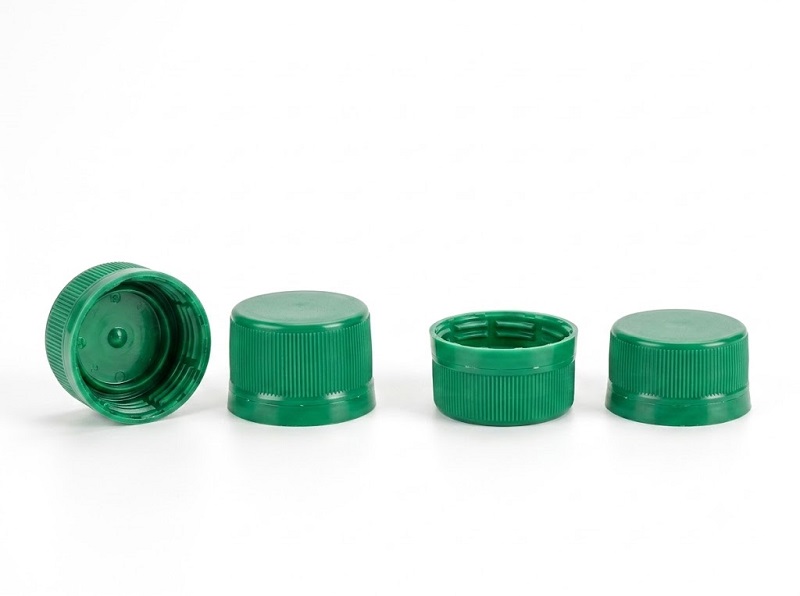
PCO 1810 and PCO 1881 are both 28mm screw thread finishes, and they look almost identical to anyone who has not studied the spec sheet. They are not interchangeable. PCO 1810 is the older, three-turn thread with a taller neck, built for proven pressure retention and broad equipment compatibility. PCO 1881 is the newer, two-turn thread with a shorter neck, built to use less plastic while holding the same seal. Which one you need depends on what equipment you already have, what you are packaging, and where you are shipping it. The comparison below walks through the practical differences from the angle most buyers actually search for.
PCO 1810
Three thread turns, taller neck, decades of proven use
VS
PCO 1881
Two thread turns, shorter neck, lighter and newer
What is PCO 1810
PCO 1810 is a 28mm neck finish built for carbonated soft drink bottles, and it has been the default thread specification across the beverage industry for decades. The neck carries three full turns of thread and a taller neck height, giving the cap more surface area to grip and seal against internal gas pressure. Because it has been the standard for so long, most legacy filling lines, capping heads, and preform molds worldwide were originally built around this exact finish, which is a large part of why it is still so common today.
What is PCO 1881
PCO 1881 is a lightweight evolution of PCO 1810, finalized by the International Society of Beverage Technologists in 2009. It uses a shorter neck and only two turns of thread, with a steeper thread pitch to make up the difference, so it holds comparable pressure performance while using noticeably less resin. It has become the preferred choice for new bottling lines and for brands actively redesigning packaging to cut plastic use.
The difference between PCO 1810 and PCO 1881
Most people searching this comparison are not trying to memorize a spec sheet, they are trying to answer one of a handful of practical questions. Here is the difference broken down by the question you actually have, followed by a full parameter table for quick reference.
Can I tell them apart just by looking at the bottle?
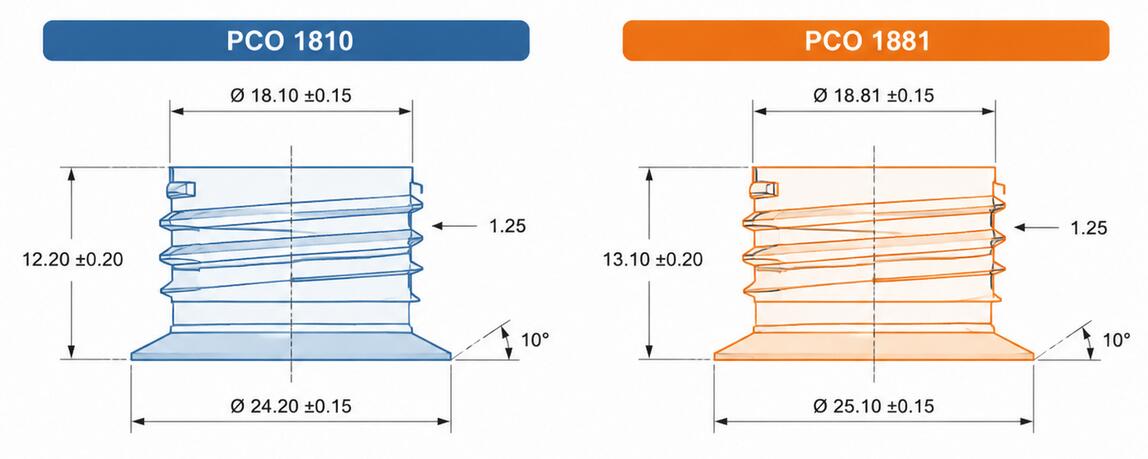
Not easily, and this is exactly why mix-ups happen on production floors and in warehouses. Both finishes sit at the same 28mm diameter, so a quick glance rarely settles it. The giveaway is the neck: PCO 1810 has a visibly taller neck with three distinct thread ridges you can count if you look closely, while PCO 1881 has a shorter, more compact neck with only two ridges spaced further apart because of the steeper pitch. If you are holding a cap and preform together, the safest test is not visual, it is trying to thread them together by hand. If the cap does not seat flush and turn smoothly through its full range, you are looking at a mismatched pair, not a defective one.
Practical takeaway: count the thread ridges, or better yet, test-fit the cap on the preform before you assume compatibility.
Which one seals better under pressure?
Both are engineered to handle carbonated beverage pressure reliably, but they get there differently. PCO 1810's extra thread turn means more total thread contact, which gives it a wider margin for error if capping torque is slightly inconsistent from bottle to bottle. PCO 1881 was specifically designed with a steeper pitch to compensate for having one fewer turn, so under correctly calibrated conditions it holds pressure just as well. The real difference shows up not in a lab test but on an actual production line: PCO 1881 requires tighter, more consistent torque control to hit that same performance, since it has less thread engagement to absorb variation.
Verdict: PCO 1810 is more forgiving on inconsistent equipment. PCO 1881 matches it, but only with well-calibrated capping heads.
Which one costs less and uses less plastic?
This is where PCO 1881 has a clear, consistent edge. The shorter neck and lighter cap use less PET resin in the preform and less polypropylene in the closure. At the scale of a single bottle the savings look tiny, but multiplied across a production run of millions of units, it becomes a real, recurring reduction in material spend, plus a smaller plastic footprint per bottle, which matters increasingly for brands facing packaging sustainability targets.
Verdict: PCO 1881 wins on material cost and plastic reduction, with no meaningful downside once your line is tooled for it.
Which finish is my existing bottle or line already using?
If you already have bottles or preforms in hand, the fastest way to check is to count the thread turns as described above, or to check the technical spec sheet from whoever supplied your existing preforms or caps, since the finish is almost always documented there even if it is not obvious from a visual glance. If you are working with a filling line you did not set up yourself, check with whoever installed or last serviced the capping heads, since the torque settings and tooling on that equipment were calibrated for one specific finish and generally cannot handle the other without adjustment.
Practical takeaway: never assume, always confirm the spec sheet or test-fit before ordering a large batch of caps or preforms.
Is one of them becoming outdated, and does that matter to me?
PCO 1881 is the newer standard and is where most new tooling investment is heading, particularly among large brands with sustainability commitments. But PCO 1810 is far from obsolete. It remains the standard on a huge base of installed equipment worldwide, especially among smaller and mid-sized bottlers who have not had a reason to retool. Whether this trend matters to you depends entirely on your own timeline: if you are building new production capacity, it is worth leaning toward PCO 1881. If you already have a working PCO 1810 line, there is no urgent operational reason to switch.
Verdict: this is a market-direction trend, not an expiration date. Let your own tooling situation decide, not the industry average.
Full parameter comparison
| Parameter | PCO 1810 | PCO 1881 |
| Thread turns | Three full turns | Two turns, steeper pitch |
| Neck height | Taller neck | Shorter neck |
| Material use | Higher resin and cap weight | Lower resin and cap weight |
| Pressure retention | Strong, well proven for CSD over decades | Comparable, engineered to match despite less material |
| Torque tolerance | More forgiving of minor torque variation | Requires tighter torque control |
| Equipment compatibility | Wide compatibility with legacy filling and capping lines | Requires lines and molds calibrated for the shorter finish |
| Typical adoption | Established markets, existing lines, smaller bottlers | New lines, larger brands, sustainability-focused redesigns |
| Retooling to switch | None, if already running this standard | New preform mold and new cap mold required |
Why the industry moved toward PCO 1881
Beyond the per-bottle material savings covered above, the shift toward PCO 1881 has been reinforced by regulatory pressure on single-use plastic and by public sustainability commitments from major beverage brands, many of which specifically cite neck finish lightweighting as part of how they are cutting plastic use. At the same time, switching an existing PCO 1810 line to PCO 1881 requires new preform molds, new cap molds, and full capping head recalibration, which is a real cost that only pays for itself at sufficient volume or when bundled with a line upgrade that was happening anyway. That cost is exactly why PCO 1810 has not disappeared, and why both standards continue to run side by side across the industry rather than one fully replacing the other.
Which one fits your product line
For carbonated soft drinks, either finish works on paper. If your line is already tooled for PCO 1810, stay on it and avoid unnecessary retooling cost. If you are building new, PCO 1881 is worth the investment for long-term material savings.
For still water and non-carbonated beverages, the extra thread engagement of PCO 1810 matters less, which is part of why still water bottlers have generally adopted PCO 1881 faster than CSD producers.
For new production lines being built from scratch, PCO 1881 is generally the more forward-looking choice, since new tooling investment is happening regardless and the lighter finish pays off over the life of the line.
For export-focused buyers, check which standard dominates your target market before committing, since matching the local norm simplifies sourcing of compatible caps and preforms downstream.
For small-batch buyers running an initial trial, PCO 1810 is often the safer starting point, since it has the broadest compatibility across existing contract manufacturing equipment, reducing the risk of fit issues before you scale up.
Compatibility and switching considerations
Preform mold compatibility - the preform neck must match the cap thread exactly. A PCO 1881 cap will not seal on a PCO 1810 preform, and vice versa, despite both being labeled 28mm.
Capping head calibration - torque settings are tuned to the thread engagement of one specific finish. Switching without recalibrating can produce leaking or cracked caps.
Mixed inventory risk - if you run both standards, keep preforms and caps clearly labeled and physically separated, since the two finishes are easy to mix up on a busy floor.
Supplier tooling and lead time - confirm which finish your supplier's existing molds produce before ordering samples, since new tooling adds lead time that is easy to underestimate.
Pilot test before full production - run a small batch through your actual line before committing to full volume, regardless of which finish you choose.
FAQ
Can PCO 1810 and PCO 1881 caps be used interchangeably?
No. The thread turns and neck height are different, so a PCO 1881 cap will not properly seal on a PCO 1810 preform and vice versa.
Is switching from PCO 1810 to PCO 1881 expensive?
Yes, it requires new preform molds, new cap molds, and recalibrated capping equipment. It makes the most sense when bundled with a line upgrade you were already planning.
Which finish is better for carbonated drinks?
Both handle CSD pressure reliably. PCO 1810 has more torque tolerance, PCO 1881 matches its performance with tighter calibration and less material.
Which should I choose for a small-batch trial order?
PCO 1810, generally, since it has the widest equipment compatibility across contract manufacturers for a first run.
Can one factory produce both finishes?
Yes, but it requires two separate, dedicated sets of mold tooling, since the thread geometry cannot be produced from a single mold.
Choosing the right partner for PCO 1810 and PCO 1881 caps
Getting the spec right on paper is only half the job. The other half is working with a manufacturer that can hold tight thread tolerance on both standards, consistently, at production volume. Lile (Taizhou) Technology Co., Ltd brings 33 years of experience manufacturing bottle caps and closures, with dedicated tooling for both PCO 1810 and PCO 1881 specifications. Whether you are validating a small trial batch or scaling a full production run, working with a manufacturer that has handled both standards for decades means fewer surprises on fit, seal performance, and lead time.