
 English
  русский
 عربى
عربى
Industry News
Home / Blogs / Industry News / Flip-Top vs. Screw Cap: How to Choose the Right Closure for Your Bottle?
Content
A screw cap gives you the most reliable seal, the broadest range of standard sizes, and the simplest filling line setup, which is why it remains the default choice for most liquid packaging. A flip-top cap trades some of that sealing margin for faster one-handed dispensing and built-in flow control, which is why it shows up on products people use often or in a hurry, such as condiments, syrups, and personal care liquids. If reseal strength and broad compatibility matter most, choose a screw cap. If speed of use and pour control matter most, choose a flip-top.
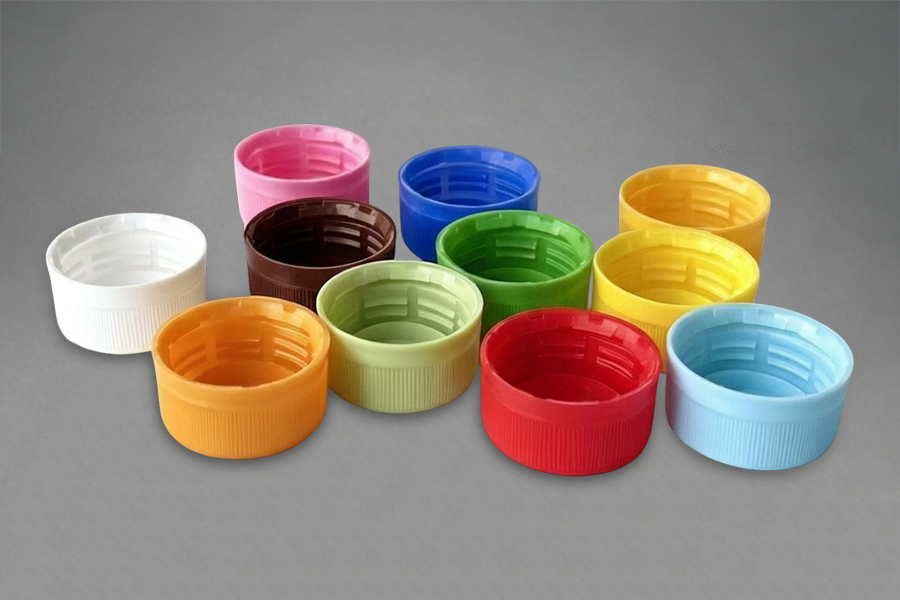
A screw cap is a single-piece closure that threads directly onto a matching neck finish. The thread engagement runs the full height of the cap skirt, which spreads sealing pressure evenly around the neck and makes the closure resistant to loosening from vibration during shipping.
Most screw caps use a continuous thread (CT) profile, meaning the thread runs as one unbroken spiral rather than separate segments. This design gives consistent torque across the full turn of the cap, which is part of why screw caps are the default closure across water, juice, sauces, and household liquids.
Plastic screw caps commonly include a tamper-evident band connected to the base of the skirt by small bridges. When the cap is twisted open for the first time, the bridges break and the band stays on the bottle neck, giving a visible, permanent sign that the seal has been broken.
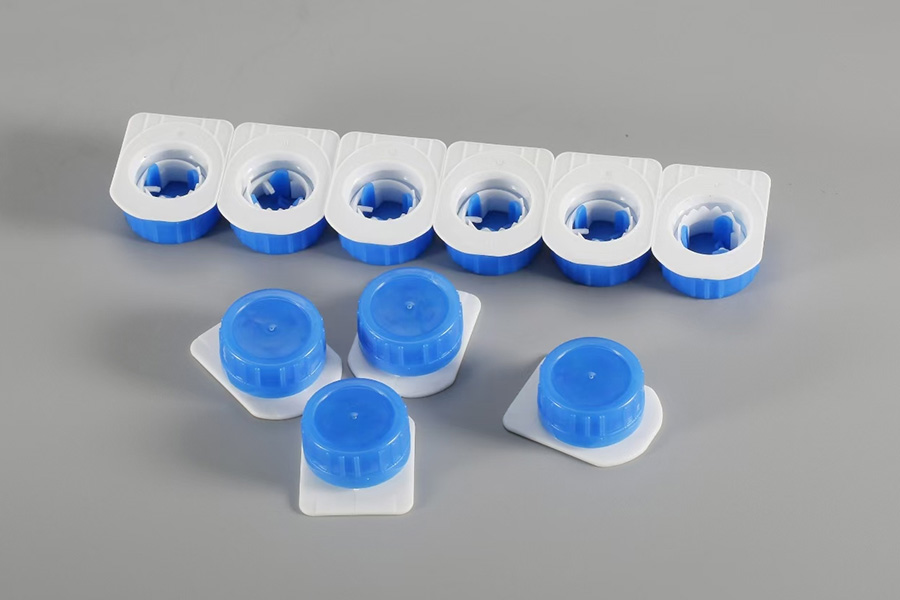
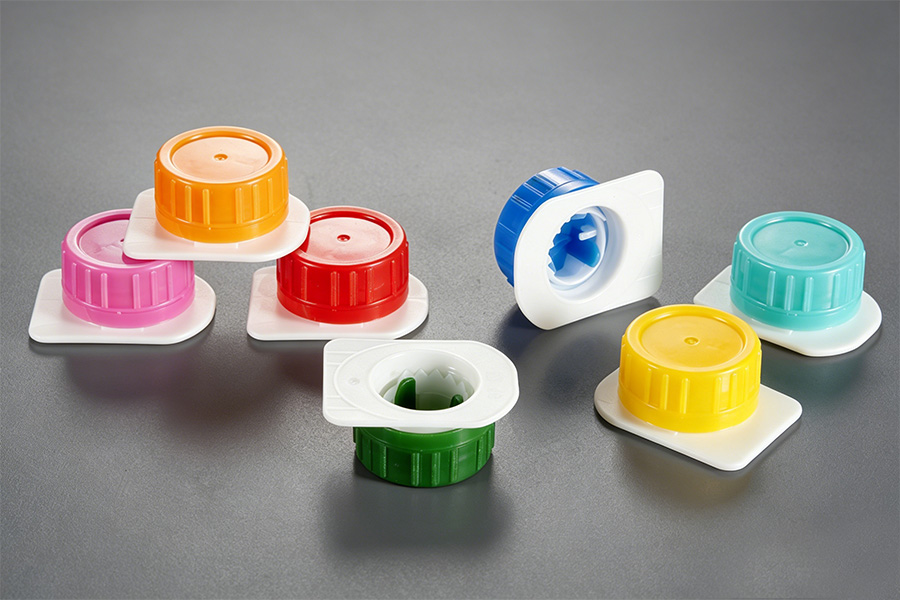
A flip-top cap is typically a two-part or hinged design: a base that stays threaded or snapped onto the bottle, and a lid connected by a small hinge that snaps open and closed over a pour spout. The user never fully removes the cap from the bottle, which is the main reason flip-tops dispense faster than screw caps.
The hinge is molded as a thin, flexible strip of plastic that allows the lid to snap between open and closed positions without breaking under normal use. The spout opening size is part of the mold design, which means flow rate can be tuned during product development rather than left to the viscosity of the liquid alone.
Because the lid only needs to be flipped rather than unscrewed, flip-top caps support one-handed opening and dispensing. This is the main reason they are common on products used frequently during a single session, such as condiment bottles on a table or personal care bottles used in the shower.
The table below summarizes how the two closure types compare across the factors that typically drive a sourcing decision.
| Factor | Screw Cap | Flip-Top Cap |
| Sealing reliability | Very strong, full thread engagement | Good, but the hinge area is the most common point of failure under pressure |
| Dispensing speed | Slower, requires full removal | Faster, one-handed flip-and-pour |
| Flow control | None unless paired with a separate spout insert | Built into the spout opening size |
| Tamper evidence | Perforated band at the base of the skirt | Tear-off ring at the base of the lid or hinge |
| Reclosure strength | Strong, full thread re-engagement every time | Moderate, hinge can wear with very frequent use |
| Tooling and piece cost | Generally lower, simpler single-piece mold | Generally higher, hinge and lid geometry add mold complexity |
| Filling line compatibility | Works with most standard capping heads | Often needs a dedicated hinge-orientation feeder |
If your filling line already runs standard capping heads, switching to flip-top caps is rarely just a cap change. Confirm hinge-orientation feeding and cap-placement tooling with your line supplier before committing.
Viscosity, frequency of use, and how the product is typically dispensed all push toward one closure type over the other.
| Product Category | Common Closure | Why |
| Ketchup, BBQ sauce, syrup | Flip-top | Frequent use, controlled pour without full cap removal |
| Soy sauce, vinegar, cooking oil | Screw cap or flip-top | Depends on viscosity and whether portion control matters |
| Shampoo, lotion, liquid soap | Flip-top | One-handed dispensing in wet or slippery conditions |
| Water, juice, tea | Screw cap | Strongest seal, broadest standard size availability |
| Honey, thick syrups | Wide-mouth screw cap or wide-orifice flip-top | Needs a larger opening to manage high viscosity |
Both closure types are built around the same standard neck diameters used across the industry, such as 28mm, 38mm, and 48mm. A flip-top cap is not a different diameter family, it is a different cap geometry applied on top of the same neck finish logic. This means switching from a screw cap to a flip-top on an existing bottle usually does not require a new bottle mold, but it does require a new cap mold, since the hinge and spout add geometry that a standard screw cap mold does not have.
Usually yes at the tooling and piece level, since the hinge and lid geometry add complexity to the mold compared to a single-piece screw cap.
Yes. Most flip-top caps include a tear-off ring around the base of the lid or hinge that breaks on first opening, similar in function to the perforated band on a tamper-evident screw cap.
Not inherently, but the hinge and spout area is the part most likely to underperform if the mold or liner is not properly validated, since a screw cap relies on continuous thread pressure while a flip-top relies on a snap-fit seal at the spout.
In most cases the bottle and neck finish can stay the same, but you will need a new cap mold built for the hinge and spout geometry, and you should re-validate the seal and capping line setup before full production.
Flip-top caps are generally preferred for on-the-go use because they allow one-handed opening and closing without setting the cap down or losing it.
If you have any questions, please fill out the contact form at the bottom of the page and contact us.
© Lile (Taizhou) Technology Co., Ltd.
Toudao Town, Taizhou City, Zhejiang Province, China.
liletz@163.com
+8613706571648