
 English
  русский
 عربى
عربى
Industry News
Content
- 1 The Direct Answer: Choosing the Right Bottle Cap Matters More Than You Think
- 2 Key Factors That Determine Closure Selection
- 3 Overview of Major Beverage Bottle Cap Types
- 4 Plastic Closures: The Workhorse of Modern Beverage Packaging
- 5 Metal Closures: Crown, Roll-On, and Twist-Off Caps
- 6 Specialty and Innovative Closures
- 7 Sustainability and Material Trends in Beverage Closures
- 8 How to Select the Optimal Closure for Your Beverage
- 9 Frequently Asked Questions
- 9.1 What is the difference between a cap and a closure?
- 9.2 Which cap type is best for carbonated soft drinks?
- 9.3 What are tethered caps and why are they being introduced?
- 9.4 How do I ensure my cap is child-resistant?
- 9.5 Can aluminum caps be recycled with the bottle?
- 9.6 What is the smallest standard cap size for a beverage bottle?
- 9.7 How long do liner seals last before failing?
- 9.8 Are there biodegradable caps available for beverages?
The Direct Answer: Choosing the Right Bottle Cap Matters More Than You Think
The optimal beverage bottle cap is not a one-size-fits-all decision. For carbonated soft drinks, a plastic continuous thread closure with a reliable gas barrier liner is standard. For beer, the metal crown cap still dominates with a share of over 40% globally. For water and sports drinks, lightweight, resealable sport caps or push-pull closures lead. The choice directly impacts product shelf life, consumer convenience, safety, and brand perception. This guide examines every major closure type, its construction, ideal use case, and critical selection factors, supported by concrete data and real-world examples.
Key Factors That Determine Closure Selection
Before examining specific cap types, you must evaluate five technical and commercial dimensions. Missing one can lead to seal failure, product waste, or a recall.
Product Carbonation and Internal Pressure
Carbonated beverages generate internal pressures between 2.5 and 4.5 volumes of CO2 at room temperature. A closure must withstand this without dome deflection, gas leakage, or paneling. The industry standard 28mm PCO 1881 plastic neck finish paired with a vented liner retains pressure for over 16 weeks at ambient conditions, losing less than 0.2 volumes of CO2 in that period.
Oxygen and Moisture Barrier Requirements
Oxygen ingress through the closure often determines shelf life. Long-neck beer bottles with crown caps achieve oxygen pickup levels below 50 ppb over 6 months. In contrast, a basic low-density polyethylene plug seal on a plastic sports drink closure can allow oxygen transfer rates of 0.5 cc/package-day, limiting shelf life to months unless an oxygen scavenger liner is added.
Filling and Processing Conditions
Hot-fill beverages at 82 to 92 degrees Celsius demand closures with a heat-resistant seal that maintains integrity as the container contracts during cooling. Closures for nitrogen-dosed beverages need a high removal torque to compensate for reduced internal vacuum, while cold-aseptic filling imposes strict sterilization compatibility.
Consumer Usage and Convenience
Reclosability, one-hand operation, and compliance with accessibility regulations shape closure design. The European Single-Use Plastics Directive has accelerated adoption of tethered caps. By July 2024, all plastic beverage caps up to 3 liters must remain attached to the container after opening, affecting over 500 billion closures annually in the EU alone.
Cost, Material, and Sustainability Targets
A standard 28mm polypropylene closure costs approximately 0.8 to 1.2 US cents at high volume. Lightweighting efforts have reduced plastic consumption by up to 30% per cap since 2000. Post-consumer recycled content is rising, with some caps now incorporating 50% rPCR. Metal caps, while more expensive per unit, offer infinite recyclability and a premium feel.
Overview of Major Beverage Bottle Cap Types
The global beverage closure market, valued at over $70 billion in 2023, segments into plastic, metal, and specialty categories. The table below maps the dominant types to their primary beverage application.
| Cap Type | Material | Primary Beverage | Global Market Share (Volume) |
| Plastic Continuous Thread (CT) | PP, HDPE | Carbonated soft drinks, water, juice | 52% |
| Metal Crown Cork | Tinplate, ECCS | Beer, cider, craft soda | 21% |
| Sports / Push-Pull Cap | PP, PE, TPE | Bottled water, sports drinks | 11% |
| Aluminum Roll-On Pilfer-Proof | Aluminum | Spirits, high-end spirits, oil | 7% |
| Lug / Twist-Off Cap | Tinplate, aluminum | Glass bottled beer, sauces | 5% |
| Dispensing / Fitment Closures | PP, silicone | Edible oil, syrups, concentrates | 4% |
Plastic screw caps dominate due to low cost and versatility, but metal closures hold strong in niches where premium perception and barrier properties are paramount. The following sections dive deeply into each category.
Plastic Closures: The Workhorse of Modern Beverage Packaging
Plastic closures account for over 60% of all beverage cap units produced worldwide. Their wide adoption stems from design flexibility, light weight, and compatibility with high-speed filling lines. The standard material is polypropylene (PP), occasionally blended with polyethylene (PE) or thermoplastic elastomers (TPE) for soft-touch surfaces.
Continuous Thread (CT) Plastic Caps
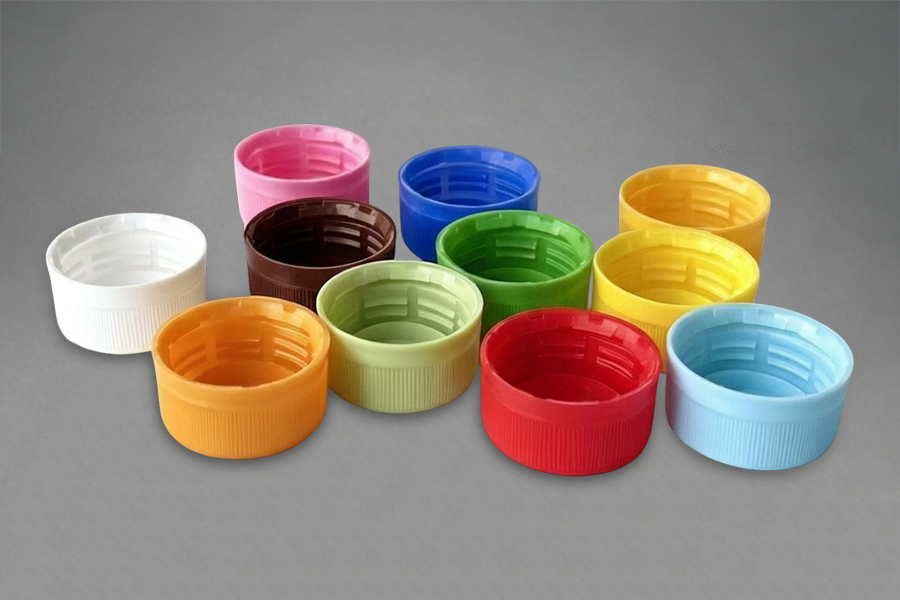
The CT cap engages a matching spiral thread on the bottle neck. It is the unmistakable standard for PET carbonated soft drink bottles. The most common neck finish is 28mm PCO 1881, defining a precise thread profile, vent slots, and sealing flange geometry. A typical CT cap includes a tamper-evident band that breaks upon first opening. For CSD applications, the cap houses a multi-layer liner: a PE foam or EVA core for compression, a PET or aluminum foil barrier layer, and a heat-seal coating that bonds to the bottle lip. This construction limits oxygen ingress to as low as 0.0005 cc/package-day when sealed correctly, keeping CO2 retention above 85% after 12 weeks.
Non-carbonated water uses a simpler single-piece PP cap with a plug seal or a thin-walled compression seal, which costs 15% less than the vented CSD version. The same platform can extend to hot-fill juices by substituting the liner with a polypropylene foam seal that withstands 88-degree-Celsius processing and vacuum absorption of the cooling container.
Key numbers: A standard 28mm PP threaded cap weighs about 2.9 grams. Lightweight versions have reached 1.9 grams, saving 30% material and reducing transport carbon by an estimated 18 kilograms per 100,000 units. Over 200 billion such caps are manufactured annually on closure presses running at up to 2,400 caps per minute per cavitation line.
Sports Caps and Push-Pull Closures
Sports caps deliver one-hand, on-the-go dispensing. The closure consists of a base screwed onto the bottle thread and a sliding or rotating spout that opens or closes the orifice. When the spout is pulled up, fluid passes through a precisely molded valve; when pushed down, the spout reseals firmly against a sealing ring. PCO 28mm sports cap models are designed to fit the same bottle neck as a CT cap, enabling a brand to switch closure types without changing the bottle preform.
A well-designed sports cap must pass a leak test under a 0.3 bar overpressure for 5 minutes and deliver a flow rate of at least 8 ml per second when fully opened. Leading manufacturers now incorporate silicone valves that open with minimal suction effort, a feature critical for children and elderly consumers. Production volume for sports closures is growing at an estimated 6.4% CAGR through 2028, driven by the booming functional water segment.
Flip-Top and Disc-Top Caps
Common on small-format drinking water, personal care beverages, and concentrate shots, flip-top caps integrate a hinged lid that snaps closed over a central orifice. The lid typically incorporates a living hinge made of PP that withstands over 5,000 open-close cycles without breaking. These closures cost slightly more than CT caps but offer supreme convenience for single-dose or multi-serve containers up to 500 ml.
Child-Resistant and Senior-Friendly Closures
Beverages containing bioactive ingredients, high doses of caffeine, or CBD often require child-resistant (CR) packaging. A common CR design is the two-piece push-and-turn cap, requiring simultaneous downward force and rotation. Caps are tested according to protocols like ISO 8317 or US CFR Title 16 Part 1700, where a panel of children aged 42 to 51 months must demonstrate a failure rate below 20% to open, while at least 90% of seniors succeed. These closures use a ratchet system inside the outer shell, adding around 1.5 grams of weight compared to a standard CT cap.
Tethered Closures: The EU-Driven Revolution
Starting July 2024, directive 2019/904 requires all plastic single-use beverage containers up to 3 liters to have caps that stay attached during use. Two predominant tether solutions exist: a hinged band that keeps the cap connected near the neck, and a slide-ring system that allows the cap to move laterally. Both maintain cap retention force above 25 N to prevent accidental detachment. Early converters report a 15% reduction in cap litter in pilot regions. The transition affects roughly 3 million tonnes of plastic closures annually in Europe alone, with global markets watching closely.
Metal Closures: Crown, Roll-On, and Twist-Off Caps
Metal caps deliver superior oxygen barrier and a premium tactile experience. They dominate glass-packaged beer and high-alcohol spirits. The primary materials are tin-free steel (ECCS) with a thin tin coating, or aluminum alloy 3104, with an average cap weight ranging from 2 to 7 grams.
Crown Corks
The crown cork, patented in 1892, remains the single most produced metal closure, with over 300 billion units annually. A standard crown cap is 26mm in diameter, has 21 corrugations, and is lined with a PVC-free plastisol compound or a polyolefin liner. When crimped over a glass bottle finish (standard 26mm ring top), the liner deforms to create an airtight seal. Oxygen transmission rate tests on properly applied crown corks show less than 0.001 cc/day at ambient conditions, which is why pasteurized beer retains flavor stability for up to 12 months. Recent advances include oxygen scavenging liners that reduce total package oxygen to under 30 ppb for ultra-premium lagers. Despite competition from twist-off caps, crowns maintain an 80% share in the global beer market.
Roll-On Pilfer-Proof (ROPP) Aluminum Caps
ROPP closures are synonymous with spirits such as whiskey, vodka, and gin. They consist of a seamless aluminum shell with an internal liner (often PVDC or Saranex). The cap is applied to a standardized glass thread and then rollers form the metal into the thread profile and produce a pilfer-proof breakaway band. The 30/40 mm neck finish handles 70% of all spirits bottles. Because the metal forms tightly into the thread, ROPP closures achieve removal torques between 8 and 16 inch-pounds, balancing security with consumer accessibility. Aluminum caps can be fully decorated with high-register offset printing, adding a perceived premium value of up to 20% on the shelf, according to consumer perception studies.
Lug / Twist-Off Caps
Twist-off closures feature angular lugs (typically 3 or 4) that engage corresponding threads on a glass bottle finish. They are widely used for pasteurized beer and for ambient-filled juices and sauces. The cap is manufactured from tinplate or aluminum with an internal flowing gasket compound. A quarter-turn removes the cap with a distinct click-sound, signaling tamper evidence. The 38mm and 43mm diameters are most common. Vacuum retention after hot-fill cooling requires a cap that can hold a negative pressure of at least 4 psi without leaking. Newer designs incorporate a visible button that pops up when the vacuum is lost, giving consumers an immediate freshness indicator.
Specialty and Innovative Closures
Beyond mainstream caps, a range of closures solve niche performance requirements or incorporate smart technologies. These segments are growing at double-digit rates as brands seek differentiation.
Dispensing and Doser Closures
For liquid concentrates, syrup, and energy shots, dosing closures precisely meter the liquid. A common design features a separate measurement chamber that fills when the bottle is inverted and releases a fixed dose, typically 10 to 30 ml, when the cap is reopened upright. These closures rely on a valve disk and sealing plug molded from flexible LDPE. They can achieve dosing accuracy within plus or minus 2%, critical for functional beverages with active ingredients measured in precise milligrams.
Drysorb and Active Caps
For pharmaceutical beverages or vitamin-enhanced water, active caps include a desiccant or oxygen-absorbing insert. The cap body contains a chamber separated by a breathable membrane, allowing the active material to scavenge headspace oxygen without direct product contact. Data shows that an integrated oxygen scavenger cap can keep headspace oxygen below 0.5% for over 18 months, extending product shelf life by 50% compared to a standard injection-molded cap with a simple induction seal.
Smart and Connected Caps
Emerging smart caps embed NFC tags, printed sensors, or temperature loggers. A printed electronic tag on the cap seal can communicate the time of opening to a smartphone via RFID. In clinical beverage trials, over 70% of patients demonstrated improved compliance when a smart cap reminded them of their drinking schedule. Temperature-sensitive inks that change from blue to red when a probiotic drink exceeds 25 degrees Celsius add a visual quality guarantee. Each smart cap adds about 0.5 to 2 US dollars to the package cost, so adoption concentrates in nutraceutical and high-value wellness beverages.
Tamper-Evident Membrane Caps
For long-life milk, soy drinks, and similar UHT beverages, the cap often works in tandem with an induction-sealed foil membrane. The membrane, typically a multi-layer laminate of aluminum foil and heat-seal polymer, is welded to the bottle rim at 180 degrees Celsius. The cap then provides reclosability and protects the membrane. Tested membrane burst strength exceeds 0.7 MPa, and the induction process ensures that any puncture or peel is immediately visible to the consumer. This combination gives a shelf life of 9 to 12 months without refrigeration for UHT products.
Sustainability and Material Trends in Beverage Closures
Sustainability pressure is reshaping closure design at an unprecedented pace. Three main paths are pursued: lightweighting, higher recycled content, and shift to mono-material systems that improve recyclability.
Since 2000, the mass of a standard 28mm plastic CSD closure has been reduced from 4.5g to 2.5g on average, saving over 150,000 tonnes of PP annually across the industry. Breakthroughs in high-crystallinity PP grades enable thin-walled caps that still retain impact strength above 3 kJ per square meter at minus 20 degrees Celsius, meeting cold-chain distribution requirements.
Post-consumer recycled PP is entering closures through mass balance and segregated supply chains. Several leading brands now use caps with 30% to 50% certified recycled plastic, achieving a carbon footprint reduction of 35% compared to virgin material. The challenge lies in controlling odor and pigment contamination, which is addressed through super-clean recycling processes that decontaminate to levels below EFSA migration thresholds.
Tethered cap designs also support the EU goal of collecting 90% of single-use plastic beverage bottles by 2029. When the cap stays with the bottle, the recovery rate improves because both enter the recycling stream together. Metal closures, being inherently homogeneous, achieve over 95% recycling rates in countries with established metal packaging recovery systems, as steel and aluminum are easy to separate magnetically and have high scrap value.
Biobased plastics such as Braskem’s bio-PE with sugarcane ethylene are being tested for cap liners and soft-touch components, potentially offsetting fossil-based carbon. The first generation of fully bio-attributed PP closures could reduce cradle-to-gate carbon footprint by 4 kg CO2 per kg of PP. Commercial scale is expected by 2027.
How to Select the Optimal Closure for Your Beverage
The decision process can be broken into a systematic checklist that matches product attributes to technical requirements. Use the following steps, supported by the data from previous sections, to narrow your choices.
- Define the required gas barrier. For CO2-sensitive drinks, choose a cap with a metallized or EVOH barrier liner. Target oxygen ingress below 0.002 cc/day for a 12-month shelf life.
- Match the filling process. Hot-fill needs a heat-resistant seal and vacuum-compatible cap. Cold-chain distribution may allow a simpler plug seal. Aseptic filling demands cap sterilization at 35% hydrogen peroxide or electron beam treatment.
- Identify the container and neck finish. Determine if you are packaging in PET, glass, or aluminum can. Use the industry standard neck: 28mm PCO for PET CSD, 38mm or 43mm for glass twist-off, 26mm ring top for crown, 30/40mm for ROPP.
- Evaluate consumer usage. If the product is consumed on the go, a sports or flip-top cap improves experience. If it is a family-size juice, a CT cap with a pouring insert might be better. Check regulatory needs for tethers or child-resistance.
- Calculate total cost per unit. Factor in cap cost, liner cost, application machinery, and failure rate. A standard 28mm CT cap with liner costs around 1.2 cents, while a premium sports cap costs 3 to 5 cents. For 50 million units per year, this difference exceeds 1.5 million dollars in packaging cost.
- Consider recycling infrastructure. Opt for mono-material PP caps where possible. If using aluminum, ensure compatibility with local recycling streams. In Europe, tethered caps are now mandatory; check your target market legislation.
- Test rigorously. Simulate real supply chain stress: vibration, drop, altitude, and temperature cycling. Measure seal integrity via helium leak test, CO2 loss by pressure gauge, and removal torque over storage. A cap that passes lab conditions but fails in a hot container truck at 50 degrees Celsius is a liability.
A typical development timeline for a new closure from concept to commercial launch spans 6 to 18 months, with mold fabrication alone taking 8 to 12 weeks. Prototyping using 3D-printed caps for fit and ergonomic evaluation speeds initial screening before committing to steel tooling.
Frequently Asked Questions
What is the difference between a cap and a closure?
In the packaging industry, "closure" is the broader term referring to any device that seals a container. A "cap" is a specific type of closure, typically one that covers and seals the opening via threads, lugs, or crimping. All caps are closures, but not all closures are caps; a wine cork is a closure but not a cap.
Which cap type is best for carbonated soft drinks?
The plastic continuous thread cap with a vented gas-barrier liner is the industry standard. It fits the 28mm PCO neck finish, allows excess pressure to vent during opening, and retains CO2 for months. Metal crowns cannot be resealed, making plastic CT caps the preferred choice for multi-serve PET bottles.
What are tethered caps and why are they being introduced?
Tethered caps are plastic closures designed to remain attached to the bottle after opening. They are mandated by EU Directive 2019/904 to reduce litter and increase recycling rates. They use a hinge or sliding ring mechanism, ensuring the cap stays with the container through the waste chain. By 2027, tethered designs are expected to become standard globally beyond Europe.
How do I ensure my cap is child-resistant?
You must use a certified CR closure tested per regional standards such as ISO 8317 or US 16 CFR Part 1700. Common solutions include push-and-turn caps or squeeze-and-turn side-lock caps. Work with an accredited test lab to certify the complete package with your specific container and product, as the combination can affect performance. CR caps typically increase per-unit cost by 2 to 4 cents compared to a standard CT cap.
Can aluminum caps be recycled with the bottle?
In most single-stream recycling systems, aluminum caps on glass bottles are separated during crushing and processed with mixed metals. For plastic bottles, aluminum caps should ideally be removed before recycling because they contaminate the PET stream if not properly separated. Many Material Recovery Facilities use eddy current separators to extract aluminum, but separation efficiency varies. The best practice is to follow local guidelines and design for disassembly when possible.
What is the smallest standard cap size for a beverage bottle?
The 18mm PCO 1810 is the smallest common plastic beverage closure standard, used for personal water bottles, small energy shots, and some dairy shots. The 20mm roll-on aluminum cap is a similar small size for miniature spirit bottles. Most mass-market beverages use 28mm or larger.
How long do liner seals last before failing?
A well-applied induction seal can maintain integrity for up to 24 months under recommended storage conditions. However, factors such as headspace volume, temperature fluctuation, and aggressive liquids reduce this. Accelerated aging tests at 40 degrees Celsius and 75% relative humidity are commonly used to simulate 2 years of shelf life in 3 months. Typical specification for critical pharmaceutical beverages demands a minimum of 18 months with torque retention above 50% of initial value.
Are there biodegradable caps available for beverages?
True biodegradable caps suitable for beverages are not yet commercially widespread. Some pilot products use PHA or PLA blends, but they challenge barrier and thermal properties. Current focus is on recyclable, bio-attributed PP, which offers identical performance to fossil-based PP while reducing carbon footprint. Compostable caps are used for niche products like water sold in PLA bottles, but these require industrial composting and are not compatible with mainstream recycling streams.